It takes a village
Critical differences in pediatric skin diseases call for tailored, family-centered care.
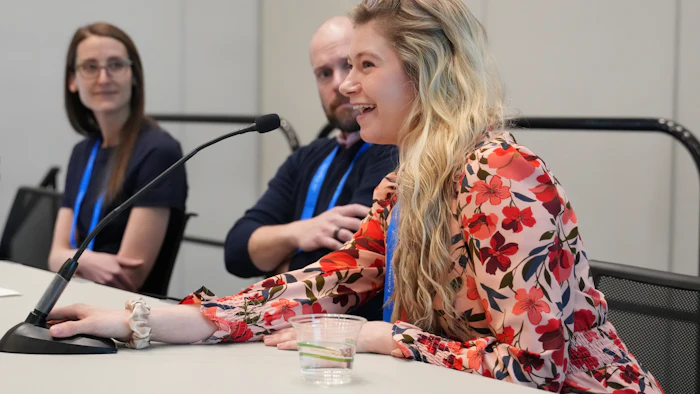
Pediatric patients are not simply small adults; they often require distinct diagnostic procedures, treatment strategies, and family-centered communication. This important reminder served as the throughline of the 2026 AAD Annual Meeting session, F079 – Pediatric Dermatology for the Adult Dermatologist. Session director Valerie Carlberg, MD, FAAD, and a panel of specialized pediatric dermatologists encouraged physicians to rethink how they approach, diagnose, treat, and manage skin conditions in children.
 Valerie Carlberg, MD, FAAD
“Pediatric patients remain an underserved population within dermatology, with limited access to subspecialty care,” said Dr. Carlberg, who is an associate professor of dermatology at the Medical College of Wisconsin. “Many dermatologists who primarily treat adults already possess the foundational knowledge needed to care for children with skin disease. This session emphasizes the natural history and outcomes of pediatric conditions, how to select age-appropriate and evidence-based treatments, and recognizing when collaboration with a pediatric dermatologist is beneficial.”
“Children and adults can be impacted by different conditions,” said Stephen R. Humphrey, MD, FAAD, associate professor of dermatology and pediatrics at the Medical College of Wisconsin in Milwaukee. “For example, we commonly see infants with infantile hemangiomas, and although skin cancer is rare in this age group, it’s much more common in adults.”
Even in conditions that occur in both pediatric and adult patients, common inflammatory diseases can present very differently depending on a patient’s age, Dr. Humphrey said. Atopic dermatitis, for example, often appears on the cheeks, trunk, forearms, thighs, and lower legs in infants, shifting to the elbow creases and behind the knees as they get older. By contrast, adults tend to show more hand-dominant dermatitis.
Subtle-to-serious distinctions
Additionally, children frequently present with multiple diseases, which can make diagnosis and treatment extra challenging, said Sarah Robinson, MD, FAAD, assistant professor of dermatology at Tufts University School of Medicine in Boston. Examples that she has seen include a patient who had a bad case of hand, foot, and mouth disease as well as atopic dermatitis. She has also seen confluent and reticulated papillomatoses (CARP) as a comorbidity to other diseases, including acanthosis nigricans.
 Sarah Robinson, MD, FAAD
“Dermatologists also play a role in educating [patients] about and screening for comorbidities,” Dr. Robinson said. “For example, identifying metabolic syndrome in children with psoriasis or mental health issues associated with chronic skin disease can often impact long-term health and quality of life into adulthood.”
Outside the norm
Gaining experience and ease in treating cancer-related skin disorders is also important, said Karina Vivar, MD, FAAD, a clinical assistant professor of dermatology at Northwestern University’s Feinberg School of Medicine in Chicago. In her career, she has learned to recognize patterns of several common cutaneous reactions to targeted anti-cancer therapies in pediatric patients. Active preventive and reactive treatment strategies can assist with minimizing interruptions to life-saving therapies, she said.
“Indications for MAPK pathway inhibitors in pediatric patients are multiplying in fields including oncology, vascular lesions, and RASopathies,” Dr. Vivar said. “Pediatric patients on targeted anti-cancer therapies typically have three or more cutaneous reactions. Younger patients may present more frequently with eczematous dermatitis and keratosis pilaris-like eruptions. Pre-teens and teenagers present more frequently with acneiform eruptions.”
 Karina Vivar, MD, FAAD
“Optimal treatment strategies in children for cutaneous reactions to MAPK pathway inhibitors involve intensive patient education for caretakers, given the presence of multiple concomitant side effects, such as acneiform eruption and paronychia, and the need for several topical treatments and likely oral medications,” Dr. Vivar said. “Shared decision-making with families is imperative to effective therapy: to balance the burden of consistent application of topical therapies; to take into account age-appropriate considerations such as being able to swallow pills; to address pain, pruritus, or dermatoses that affect self-image and self-confidence; and to allow for continuation of cancer-fighting treatments.”
Family ties
Dr. Humphrey also reiterated the criticality of working closely with a pediatric patient’s family members, as they are the ones who will lead treatment application and adherence.
“When you treat children, you are also educating the parents and caretakers on the skin disease and prevention. Building rapport with families and spending time on the natural history of the condition as well as preventive measures (where appropriate) is particularly important,” Dr. Humphrey said. “It’s imperative to share expectations with parents and caregivers as many of the conditions we treat are chronic. Children may not like a lot of the ointments, creams, and medications that we use, so approaching patients and families with curiosity when treatments do not seem to be working is often quite enlightening.”
 Stephen R. Humphrey, MD, FAAD
Adjusting to patient/family schedules and understanding how they feel about the medications you’ve prescribed can help to customize and optimize a treatment approach.
“There is certainly no ‘one-size-fits-all’ plan,” Dr. Humphrey said.
Dr. Robinson said social determinants of health also shape treatment success, reminding attendees that some pediatric patients and their families face barriers to specialty care or other contextual challenges that must be considered when creating a realistic, sustainable treatment plan that will be embraced by families, she said. It’s a sentiment shared by Dr. Carlberg as well.
“Families often have valuable insights into their child’s condition and are more likely to adhere to treatment plans when their concerns are heard and addressed,” Dr. Carlberg said. “Although caring for pediatric patients may require additional time and patience, it is deeply rewarding to improve the quality of life for patients who have decades ahead of them.”
Dermatology and the immune system
The final speaker Kate E. Kondratuk, MD, FAAD, an assistant professor of pediatric dermatology at Medical College of Wisconsin in Milwaukee, homed in on inborn errors of immunity (IEI), also known as primary immunodeficiency disorders (PIDD). These are genetic disorders, categorized into nine types, where children are born with dysfunctional immune systems.
According to Dr. Kondratuk, approximately 40% of patients with IEIs will experience unusual or severe skin, hair, and nail manifestations. Many of these patients will experience significant delays in diagnosing and treating their cutaneous manifestations.
“Dermatologists are critically important for early recognition of IEI,” she said.