Giving shade
The growing importance of the field cancerization concept and therapies in preventing skin cancer.
As rates of sun damage and nonmelanoma skin cancers (NMSC) continue to rise across the United States, dermatology experts are calling attention to the critical role of field cancerization (FC) therapies, a comprehensive strategy aimed not just at treating visible precancerous lesions but the entire “at-risk” area of chronically damaged skin.
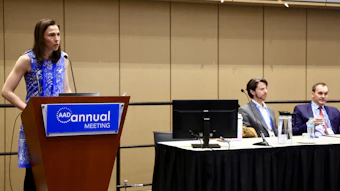
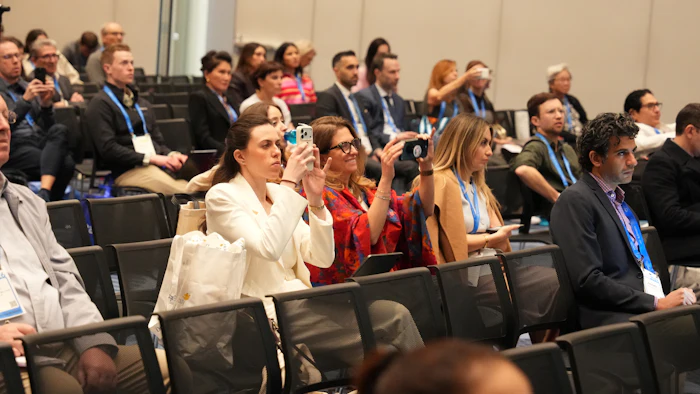
A panel of speakers addressed this topic at the session, U045 – Field Cancerization Therapies: Medical Dermatology and Beyond, which outlined FC’s evolution, approach, and potential to reshape skin cancer prevention and management.
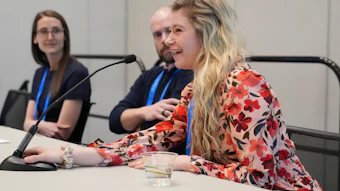
“Field cancerization means that an entire area of tissue — often exposed to long-term damage like UV light — looks normal but contains many genetically altered cells. These ‘at-risk’ cells can give rise to multiple precancerous or cancerous lesions over time,” said presenter Nellie Konnikov, MD, FAAD, an adjunct clinical professor of dermatology at Tufts University School of Medicine in Boston. “As a simple example, sun-damaged skin — areas with multiple actinic keratoses — can develop into squamous cell carcinomas.”
The ‘what’ and ‘why’ of FC
Session director Maria M. Tsoukas, MD, PhD, FAAD, and presenter Rolf-Markus Szeimies, MD, PhD, IFAAD, said FC is a treatment approach directed at the areas of the skin that appear normal but harbor widespread genetically altered cells capable of developing into multiple actinic keratoses (AKs) or squamous cell carcinomas (SCC) over time.
These areas often sit adjacent to visible lesions and are the result of cumulative damage from UV exposure, environmental pollutants, or chronic immunosuppression, Dr. Tsoukas said. As a result, she encouraged physicians to shift from lesion-focused dermatologic care to comprehensive field-based treatment.
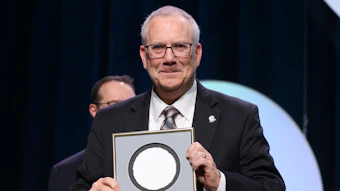
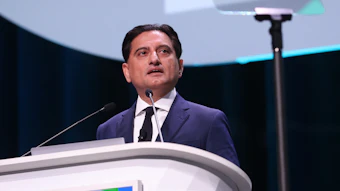
 Maria M. Tsoukas, MD, PhD, FAAD
“Because extensive photodamage and precancerous lesions are present in patients with nonmelanoma skin cancer as well, field therapies play an important role in ‘clearing up’ the areas with cytologic atypia and preventing future distinct precancerous lesions like AKs and NMSCs,” Dr. Tsoukas said.
Treatment toolbox
The choice to leverage FC therapy is dependent upon multiple variables, according to Drs. Tsoukas and Konnikov. Emphasis remains on patients with history of NMSC, particularly high-risk SCCs, per the Brigham and Women's Hospital (BWH) staging system classification. Dr. Tsoukas highlighted the value of combination protocols developed by her group at the University of Illinois, Chicago, as well as additional evidence in the literature.
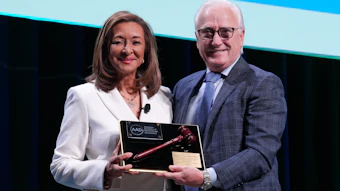
 Nellie Konnikov, MD, FAAD
“FC therapies are applied in a cyclical mode during the year, depending on severity, and involve monotherapies or combination modalities. Combination treatments are applied in various entities in dermatology and in medicine and therefore are a common practice approach. Skin FC is an excellent example,” Dr. Tsoukas said. “Our goal is to educate our patients and provide the right solutions tailored to their needs.”
Commonly applied treatments include cryotherapy, photodynamic therapy (PDT), topical applications with 5-fluorouracil, imiquimod, and energy-based devices and modalities like PDT, said Dr. Tsoukas.
“The above can be used sequentially and in combination to increase efficacy in eradicating clinically evident AKs and even NMSC in situ along with nonclinically evident precancerous cells,” Dr Tsoukas said. “It remains critical to evaluate our patients in two- to three-month follow-ups (and per cancer surveillance protocols as applied) and pursue biopsies for lesions that appear nonresponding to field therapies to address evolving invasive keratinocyte carcinomas.”
Apart from the use of FDA-approved modalities for AK management, Dr. Tsoukas said that FC treatment and a combination approach often rely on the use of therapies that are not approved directly for AKs. Commonly applied combinations include topical five-day application of calcipotriol ointment with 5-fluorouracil cream for AK treatment, which is a potent protocol in FC management and in future SCC prevention. Physicians can try pretreatment of skin with topical adapalene, urea, or chemical peels prior to PDT, pretreatment of skin with CO2 laser resurfacing followed by PDT, and many others. Dr. Tsoukas also outlined clinical examples in her practice and literature.
Dr. Szeimies is head of dermatology and allergology at Knappschaft Kliniken Recklinghausen, an academic teaching hospital at Ruhr University Bochum in Germany. He reported successful experience from pretreatment with topical urea for two weeks followed by PDT with successful results in AK eradication.
“Combination approaches aim at a synergistic effect of applied modalities, skin preparation by topical applications, dosimetry facilitation, and efficient drug delivery in skin,” Dr. Tsoukas said.
Importantly, suspicious lesions for invasive NMSC need to be biopsied without any delays, said Drs. Tsoukas and Szeimies, especially in chronically immunosuppressed patients. NMSCs are managed surgically and with Mohs micrographic surgery, following the guidelines within the Mohs Surgery Appropriate Use Criteria, they said.
Elemental education
During the session, the presenters underscored the importance of educating patients about field cancerization therapy.
“Patients with FC need thorough education and understanding of the importance of regular monitoring. We need to gain our patients’ trust, treat, and re-treat,” Dr. Tsoukas said. “This condition does not entail a one-time session. Patients need to understand that they will be ‘frequent flyers’ in dermatology.”
Daily SPF application is important as well, she said. Studies demonstrate that application of sun protective measures is critical in preventing future appearance of AKs and NMSCs, even though extensive photodamage has already been established.
“Patients need to understand that it is not too late to protect their skin, and that they can continue to remain active following the appropriate sun protective measures,” Dr. Tsoukas said.
Importantly, Dr. Tsoukas said patients with skin of color need to know they are not exempt. FC can and does occur in higher Fitzpatrick skin types, and dermatologists must remain vigilant in diverse patient populations.
“Delivering the right treatment to the right patient at the right time is the future of dermatology,” Dr. Konnikov said, underscoring the importance of individualized, case-by-case combination strategies.
Dr. Szeimies, who is a pioneer in daylight PDT studies and leader in the European Society of Photodynamic Therapy, further addressed the European approach for managing AKs and FC. He was co-author of the paper, “European Consensus-Based Interdisciplinary Guideline for Diagnosis, Treatment, and Prevention of Actinic Keratoses, Epithelial UV-Induced Dysplasiam and Field Cancerization,” published in the Journal of the European Academy of Dermatology and Venereology in March 2024.
“We consider patient lesion- and treatment-related factors very carefully and emphasize the duration of therapy and tolerability while deciding with our patients the preferred method,” he said.
Dr. Szeimies provided useful input from the Italian cohort on FC, while outlining that patient compliance can be affected by the number of applications entailed in a specific treatment to achieve the optimal outcome.
“Daylight PDT has also provided an option much more convenient and desirable by the patients as AK eradication effect is comparable to conventional PDT, while daylight PDT involves less pain,” Dr. Szeimies said. “Further factors need to be carefully monitored in daylight PDT like geographic location and weather conditions, patient compliance, AI assistance in daylight exposure, and radiation delivery methods.”