MCC progress across the board
Paul Nghiem, MD, PhD, FAAD, shared advancements in initial treatment, monitoring, and systemic therapy of Merkel cell carcinoma.
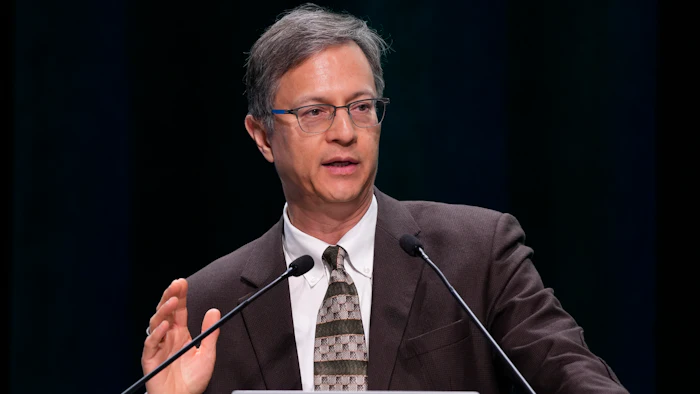
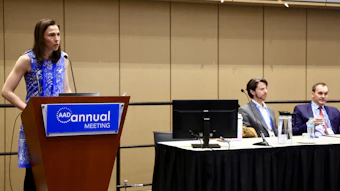
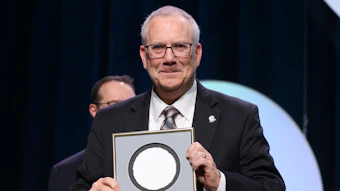
Plenary attendees looking to get a close look at advancements in Merkel cell carcinoma (MCC) were in the right spot. Paul Nghiem, MD, PhD, FAAD, the recipient of this year’s Lila and Murray Gruber Memorial Cancer Research Award and Lectureship, delivered a fast-paced but awe-inspiring presentation, “How Science Is Delivering Less Toxic, More Effective Merkel Cell Carcinoma Management.”
Dr. Nghiem is the professor and founding chair in the department of dermatology at University of Washington in Seattle, and the George F. Odland Endowed Chair in Dermatology. He shared the sad truth that MCC cases have been drastically on the rise, with a 95% increase from 2000 to approximately 2015. There are 3,000 new cases each year in the United States, and MCC is four to five times more likely to spread than melanoma. The kicker is that MCC has no distinguishing clinical symptoms, so it can be extremely difficult to diagnose.
“I do not need to tell the audience that cases of MCC can be very aggressive and very tricky,” he said. “We can potentially cure the vast majority of these with surgery and radiation, but 40% of those, no matter how optimal the treatment is, will come back. So, surveillance is very important. Then 30% of all patients will develop the need for systemic therapy because their disease becomes advanced in lymph nodes or distant sites.”
With this ice breaker, Dr. Nghiem called attention to the top three areas of improvement in MCC research in the last 20 years: surgery and/or radiation therapy, surveillance, and systemic therapy.
Surgery/radiation
Margins are good, Dr. Nghiem said, but there is such a thing as too much. He shared a real-life case of a patient who had MCC surgery with a 2-cm margin and whose graft took almost five months to heal. Unfortunately, due to the delay in subsequent radiation, his cancer spread and progressed.
He reiterated that in cases of surgery and radiation, the therapy needs to occur no later than eight weeks postop. He also shared that patient outcomes are better with single dose, 8Gy single fraction radiation therapy (SFRT) — which helps control local recurrence — compared to no radiation or conventional radiation therapy (25 dose, five weeks, 2Gy).
When it comes to initial treatment approach and what margin to get, Dr. Nghiem said to consider three things:
- Quality of life in elderly patients
- Best initial margin is wide but primarily closed, and radiation delay should be avoided if possible
- Radiation offers improved local control
Surveillance
As Dr. Nghiem mentioned in the beginning of his lecture, approximately 40% of patients will have a recurrence within three years. He said it is critical to utilize the MCC recurrence risk calculator to measure a person’s prognosis and track risk over time. The calculator measures age, sex, stage, primary site, and immune health.
However, the addition of another tool, a circulating tumor DNA (ctDNA) test, can drill down to when recurrence could occur. The blood test requires tumor tissue but can find tumor-specific mutations by measuring MCPyV antibodies — a key biomarker for MCC.
Systemic therapy
For those patients who go on to require systemic therapy, Dr. Nghiem said there has been a shift from chemotherapy to immunotherapy, where advancements have contributed to survival outcomes.
“Chemotherapy rarely provides durable response,” he said. “… When the cancer comes back, it is angry and the immune system has been suppressed. It’s a very bad combination.”
In a recent study of 300 patients with detectable CD8 T cells in their tumors, everyone survived. Novel tools can look for these cells within blood of these tumors to better control the cancer.
“We should look at anti-PD-1 and anti-PD(L)-1. The bottom line of many studies is if you get one of these versus chemotherapy, your chance of being alive is increased more than sixfold,” he said.
This groundbreaking research led to updates in the National Comprehensive Cancer Network (NCCN) guidelines and the FDA approval of two new therapies.
Next steps
Dr. Nghiem left attendees with two final takeaways: Refractory MCC is the next big problem to solve, and multidimensional care is essential to patient care.
“No one, certainly not me, can do a good job as one person,” he said. “Dermatologists are poised to be the team captain. We understand skin cancer. We will track the patients before they get cancer and after they get cancer.”