Exploring pathways of inflammatory skin diseases
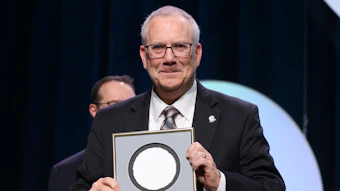
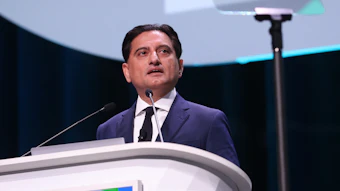
Johann E. Gudjonsson, MD, PhD, FAAD, honored for his groundbreaking research, presented the 2026 Marion B. Sulzberger, MD, Memorial Award and Lectureship.

Despite the highly variable types and presentation of inflammatory diseases, the activation of specific inflammatory responses as well as the involved associated pathways are location- and context-dependent, said Johann E. Gudjonsson, MD, PhD, FAAD, Sunday’s Marion B. Sulzberger, MD, Memorial Award and Lectureship recipient. Dr. Gudjonsson is the Arthur C. Curtis Professor of Skin Molecular Immunology at the University of Michigan, Ann Arbor, and director of the University of Michigan Skin Research Center.
In his presentation, “Anatomic Niches and Immune Convergence: Rethinking Skin Inflammation,” Dr. Gudjonsson outlined the spectrum of overlapping mechanisms that are shared between the skin ecosystems of various dermatologic diseases through single-cell and spatial transcriptomics analysis. For example, he demonstrated the shared mechanisms and pathways between plaque psoriasis, dermatitis, lichen planus, hidradenitis suppurativa, and guttate psoriasis.
Dr. Gudjonsson said single-cell sequencing and spatial profiling have made it possible to dissect the biological mechanisms at a molecular level. By viewing shared pathways, he said it is also possible to identify unique disease-specific mechanisms. Some of these mechanisms have included IL-36-driven amplification in the psoriatic epidermis, the architecture of hidradenitis suppurativa, and lichen planus T-cell interactions.
“All of these factors play a role in how diseases present,” he said.
In better understanding the crossovers, identification of the specific mechanisms is more likely, contributing to more personalized therapeutic strategies.
“If we understand how immune pathways interact with tissue niches,” Dr. Gudjonsson said, “we can move from ‘describing diseases’ to explaining them, opening the door to truly mechanism-based dermatology.”