Helping, healing the unseen
Kenney lecturer Iltefat H. Hamzavi, MD, FAAD, inspired dermatologists to ‘run to the pain.’
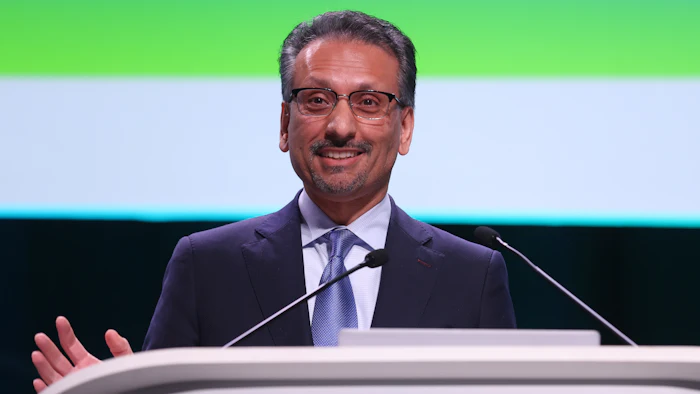
When challenges or crises arise, our bodies’ initial response is often flight over fight. But that is not the case for Iltefat H. Hamzavi, MD, FAAD, who is senior staff physician at Henry Ford Hospital in Detroit, associate professor at Wayne State University, and physician at Hamzavi Dermatology/Dermatology Specialists. He shared that his core philosophy in life is to “run to the pain,” which he has spent his career doing — sometimes on purpose, and sometimes by chance.
“My kids would say I’m a pain, but I also go where the pain is,” he said.
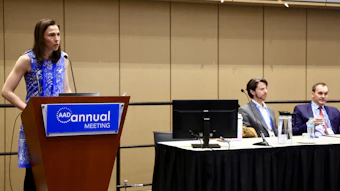
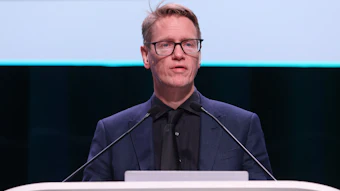
Dr. Hamzavi delivered the John Kenney Jr., MD Lifetime Achievement Award and Lectureship, at Sunday’s Plenary. His presentation focused on hopeful outcomes that dermatology offers its patients every day.
Although he never met Dr. Kenney, Dr. Hamzavi said his integrity, inspiring journey, and impact are a guiding light for him.
“Pearl [Grimes, MD, FAAD] gave me the best line: ‘He made the unknown, known. He made the unseen, seen,” he said. “I come from a background of photomedicine, and a lot of what I do is apply the learnings of photomedicine to help make the unseen seen in honor of what Dr. Kenney did.”
Vitiligo
Dr. Hamzavi said his true first test of running to the pain occurred in Vancouver, following his residency. He came across vitiligo — then a difficult disease to treat because it wasn’t recognized for its honest burden of disease.
“We’re here at the Academy partly because our job is to reduce the pain of skin diseases. But sometimes we don’t recognize the disease,” he said. “At the time, the AAD stated that the burden of disease for vitiligo was unmeasured and didn’t exist.”
He shared a video with more than one million YouTube views that captured real individuals with vitiligo speaking about their condition and its power on their lives.
“The video talks about truth, hope, and change; how individuals of different shades of color are impacted by this disease,” Dr. Hamzavi said. “All those tears, all those identity shocks must be factored. I wanted to measure what matters, because if you don’t have numbers, it doesn’t mean anything.”
He quickly took on the responsibility to be able to measure what matters and quantify the disease to create better treatment. His dedication, alongside other experts, led to the development of the Vitiligo Area Surfacing Index (VASI). The straightforward scoring system, which was adapted from others, comprises five steps:
- Break the body into zones.
- Identify depigmented zones.
- Determine the level of depigmentation.
- Determine the amount of surface area affected.
- Combine the depigmentation and surface area to calculate a VASI score.
Now, Dr. Hamzavi said, VASI is the gold standard. It served as the basis of the first FDA-approved treatment, ruxolitinib cream 1.5%. It helped physician-scientists develop the melanocyte-keratinocyte transplant procedure (MKTP). It helped the world see vitiligo for what it truly is, he said: a psychosocial disease. Being able to measure the burden of disease of vitiligo turned patients’ tears into patient triumphs.
Hidradenitis suppurativa
Another scenario that presented itself to Dr. Hamzavi later in his career, once he was in Michigan, was when a young woman with HS came to him. He said she and her mother expected him to cure her, but he didn’t know if he could.
“If you know anything about people in Detroit, you know we can’t say no,” he said.
This patient, who made a documentary about her life and the psychological trauma she endured — and continues to endure, although she is in stable condition now.
According to Dr. Hamzavi, the burden of HS — which is physical, psychosocial, and financial — causes worse quality of life than most other chronic diseases. HS has the highest suicide rate among dermatologic conditions, and until 2018, the disease only had $50,000 of NIH funding.
Dr. Hamzavi quickly applied himself, volunteering his time and effort to the HS Foundation, collaborating to develop a CO2 laser technique, and advancing practice of the YAG laser — the primary treatment option for HS patients with all skin types.
“If you run with the pain as a specialty, if you run with the pain as a profession and lead with your values, the resources will follow,” he said. “No one cared about HS 20 years ago, now the elevators are covered with HS pictures.”
The list goes on
Throughout his career, Dr. Hamzavi said he has applied his early-on learnings from his work with vitiligo to other areas. Alongside leading dermatologists including Henry W. Lim, MD, FAAD, Dr. Hamzavi pursued his hypothesis that visible light can cause clinically meaningful pigmentation in people with darker skin types.
The team collaborated with physicists, “because when we come together, we can get greater impact,” he said.
Research found that UVA wavelengths induce pigmentation in Fitzpatrick skin types IV to VI. Additionally, visible light induces erythema, which can be clinically observed immediately after irradiation. Dr. Hamzavi also confirmed the premise that existing broad-spectrum sunscreen provides minimal or no protection in the visible light range (400-700 nm). Now, there are tinted sunscreens that offer tailored safeguarding against visible light for all skin types.
Dr. Hamzavi came to the rescue again during the COVID-19 crisis when Henry Ford Hospital lacked enough PPE equipment. He put his hands together to combine photodermatology and virology, repurposing ultraviolet germicidal irradiation (UVGI) chambers.
Onward, together
Dr. Hamzavi acknowledged his personal mentors, including Drs. Boyd Savoy, Herman Pinkus, and Ken Hashimoto, and paid respect to his late parents who were also doctors, S.L. Husain Hamzavi, MD, and Aquela Fatima Hamzavi, MD.
Takeaways for his colleagues included five pearls:
- Medicine is a team sport.
- Science evolves but it serves society.
- Mission cannot be quantified, but actions can be measured.
- Run to the pain. Make the unseen seen, even if it is right in front of you.
- Enjoy your friends.
Finally, he concluded with a beautiful Hindustani poem that he also translated to English: “Carry life with you, carry the universe with you, and when you walk, walk with the whole world alongside you.”