Pitching in for a joint cause
Incoming President Murad Alam, MD, MSCI, MBA, FAAD, urged dermatologists to invest in the specialty’s future.
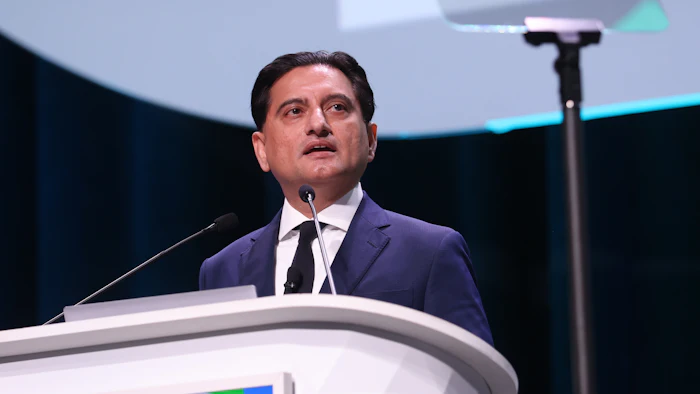
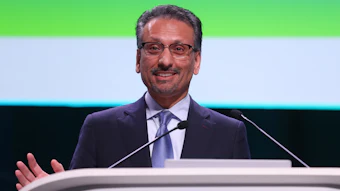
In his address to AAD members as incoming president, Murad Alam, MD, MSCI, MBA, FAAD, spoke bold words. He made it known that he is here to lead the organization toward its goal of achieving Medicare reimbursement reform — but noted that the effort will require unified member support to succeed.
“I have immense gratitude toward all of you for allowing me to be your president. This is the greatest honor of my life, and it is also a great responsibility,” he said. “We are all here together to address the challenges that we collectively face.”
The biggest challenge facing dermatologists, Dr. Alam said, is Medicare and private payer reimbursements that are being eroded by inflation. In the last five years alone, he said there has been a 30%-35% decline in Medicare reimbursement payments when both the lack of inflation adjustments and actual reductions in payments are taken into account. It is a ticking time bomb, an unsustainable trajectory.
“I owe you the truth,” he said. “The truth is we cannot survive and serve our patients if we cannot keep the lights on. And we cannot keep the lights on if we get paid less each year. And we will not get paid any more until we advocate fiercely. And fierce advocacy will only work if it is backed by money.”
Dr. Alam intends to begin work on day one to improve internal and external advocacy efforts with the mission to establish new federal regulations that adjust Medicare payments for inflation now and in the long term.
“We will work with other specialties in medicine to magnify our voice. We will enlist our patients to advocate for the timely access that can only be provided by viable practices,” he said. “We will communicate directly with CMS and regulatory agencies to influence them to interpret existing laws in a reasonable manner.”
Amplifying these efforts, he said, will require more money to be spent on focusing attention on the problem of Medicare payment reform.
According to Dr. Alam, if every U.S. doctor donated $5,000 a year to a federal political action committee (PAC), there would be a pot of $5 billion available to help influence regulations. SkinPAC (the American Academy of Dermatology Association’s PAC) is the second largest medical association PAC after only anesthesia. Using the same formula, it could raise $150 million every two-year congressional cycle, compared to the current average of $2 million every two years. These significant additional funds would support the specialty and fuel legislative change.
“Some might say throwing money at a problem will not solve it. They may argue that we need to be strategic. Indeed, good strategy can make money go further. But the first step is the money,” Dr. Alam said. “Without enough money, no amount of strategy, no matter how well-executed, will work. With enough money, almost any strategy will have the intended effect.”
The solution is simple, he said, but it requires everyone. “We can solve this problem together, but we must all be in. We must be united and persistent in our commitment.”