Defeating dermatologic deserts
Robert T. Brodell, MD, FAAD, shared strategies for getting dermatologists to live and work in underserved rural areas.
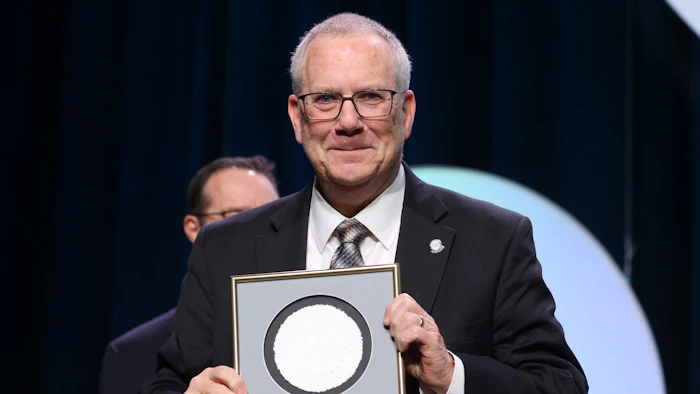
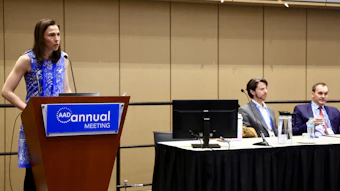
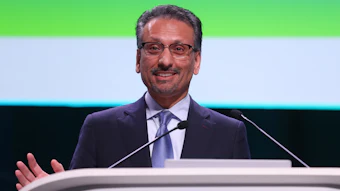
“Rural areas in the United States lack adequate access to dermatologic care,” said Robert T. Brodell, MD, FAAD, who presented the Clarence S. Livingood, MD, Memorial Award and Lectureship on Sunday. Dr. Brodell, who is tenured professor in the departments of dermatology and pathology at the University of Mississippi Medical Center in Jackson, passionately laid out how to improve access in his presentation, “Improving Rural Access to Care: Consider the Options.”
To illustrate his thesis, Dr. Brodell showed maps of Mississippi highlighting the dearth of practicing doctors and the large gaps where they were nonexistent. He showed a similar map of New York state revealing the same gaps outside the major urban areas.
“The maldistribution of doctors is real,” he said, “and the negative effect shows up in morbidity and mortality outcomes.”
Dr. Brodell offered three potential solutions:
- Train more dermatology residents. If urban areas become crowded, there will be a rural “trickle-down” effect.
- Recruit students from small towns and provide residency training in rural areas.
- Build new residency programs where they are needed. He reported there are currently 147 dermatology residencies in 40 states, while 10 states have none: Alaska, Delaware, Hawaii, Idaho, Maine, Montana, Nevada, North Dakota, South Dakota, and Wyoming.
Dr. Brodell shared elements of his Mississippi model that have proven successful:
- Establishing a department of dermatology with a residency program in a rural state or underserved rural area.
- Establishing a rural academic office, such as what he did in Louisville, Mississippi, and training students and residents in rural America. He described a recent situation in which a colleague, Adam Byrd, MD, FAAD, wanted to return home and practice in Louisville, 90 miles from the nearest medical center. In this instance, Dr. Byrd was able to draw a physician salary, benefits, and incentives as if he were part of the “mothership.” Dr. Brodell said the result of this inaugural program has improved access for rural residents with 4,500-5,000 visits per year, a modest wait time of 17-19 days for new patients, and a program that is sustainable as well as profitable.
- Establishing a rural dermatology residency track with one rural residency per year, three contiguous months of rural training yearly, and a three-year commitment.
However, the three-year commitment to rural practice and the small pool of rural medical students is a challenge. To counter this, he suggested establishing monthly rural free clinics, e-consults, distance education, volunteering at an academic institution or in AAD’s Pathways Program mentoring rural or inner-city students, or teaching skin science at a rural high school.
“Or you could reinvent yourself and move to a rural area,” Dr. Brodell suggested.