Social media requires a thick skin
Dermatologists take a leadership role online to prevent the spread of misinformation and engage with patients.
F047 – Combatting Misinformation and Positioning the Specialty on Social Media
3:30–5:30 p.m. | Saturday, March 28
Bluebird 2B
Medical misinformation is everywhere these days, and perhaps nowhere is it more prevalent than on social media. But board-certified dermatologists have the opportunity to change that while simultaneously engaging with patients, representing the specialty, and furthering their own careers.
Charles Dunn, MD, FAAD, a dermatologist in Port Orange, Florida, said social media is an area where dermatologists not only need to expand their presence, but also take on more of a leadership role.
“The reality is that if board-certified dermatologists are absent from these platforms, the information vacuum is often filled by nonexperts, commercial interests, or inaccurate claims,” he said. “The goal is not simply visibility, but responsible leadership in a digital public square that already exists.”
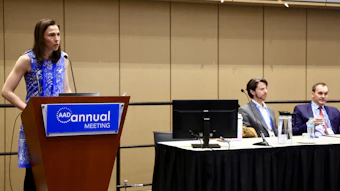
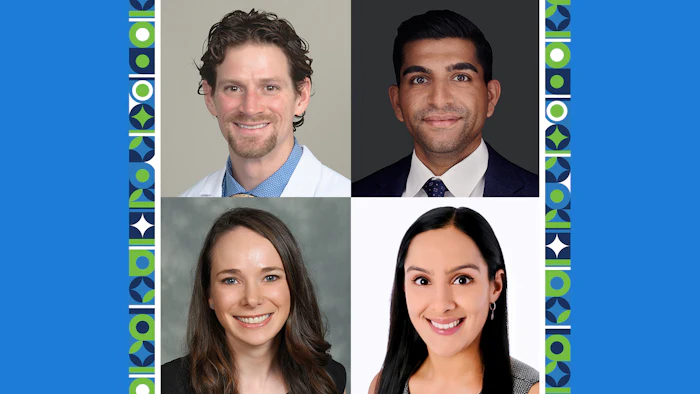
Dr. Dunn is the director for today’s session, F047 – Combatting Misinformation and Positioning the Specialty on Social Media. The panel discussion will focus on strategic planning, personal branding, ethical considerations, and direct involvement with the AAD.
“The [session] is intended to synthesize these elements and provide real-world scenarios along with audience engagement,” he said. “We also aim to demystify the process of getting started while reinforcing that effective digital engagement is less about popularity and more about credibility, consistency, and contribution to public health literacy.”
Truth and trust
Session panelist Amit Om, MD, FAAD, Mohs surgeon and dermatologist in Charlotte, North Carolina, said that the “information vacuum” mentioned by Dr. Dunn is one reason dermatologists need to have a presence on social media beyond passive posting. He said it is critical for dermatologists to be present to prevent nonverified influencers from spreading incorrect information.
“By establishing ourselves as the primary source of truth, we can mitigate rampant medical misinformation while educating the public at a scale far beyond what we do in our clinics,” Dr. Om said.
Session panelist Marisa Garshick, MD, FAAD, clinical assistant professor of dermatology at New York-Presbyterian/Weill Cornell Medical Center, said dermatologists can think of social media as an extension of patient education.
“There is so much misinformation about skin, hair, and nail health online and dermatologists are uniquely positioned to provide accurate, evidence-based guidance,” she said. “Having a presence on social media allows us to show up for our patients, build trust, and reinforce the value of our training and expertise while elevating the voice of our specialty.”
Dr. Garshick, who is also a dermatologist at MDCS Dermatology in New York City, said that while dermatologists can and should engage with patients online, it is important to maintain professionalism and avoid giving patient-specific advice to distinguish education from personalized care.
“It helps to remember that even if one person benefits from what you are sharing, then it is worthwhile,” she said. “It is important to emphasize that social media doesn’t have to be perfectly polished to be professional. It should feel authentic.”
Engagement and education
Session panelist Preetha Kamath Agarwal, MD, FAAD, FACMS, assistant professor of dermatology at the University of Pittsburgh Medical Center, said dermatologists should develop content that goes beyond making the occasional post or sharing someone else’s information.
Dr. Agarwal, who is also associate program director for micrographic surgery and dermatologic oncology fellowship at Pittsburgh Medical Center, said engaging content ideas can include:
- Myth-busting posts
- Educational visuals, videos, or infographics on common skin conditions, sun protection, and skin cancer awareness
- Seasonal skin care tips
- Behind-the-scenes practice insights
- Evidence-based commentary on popular skin care trends
“These are powerful platforms that impact education, advocacy, and public health and enable dermatologists to lead skin health conversations while fostering professional collaboration and broader community engagement,” she said.
Responses matter
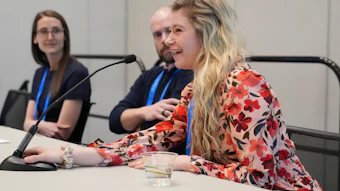
One of the biggest problem areas in any social media platform is the comments section, said session panelist Lauren Fassl. Negative comments and feedback can be overwhelming and extremely difficult to deal with. Fassl, who is the AAD’s manager of social media, said dermatologists need to learn to manage this negativity, which in some cases can be as simple as ignoring it.
“It can depend on the nature of the comment and the intent of the commenter,” she said. “In many cases, simply ignoring negative comments can prevent things from escalating further. This is particularly true for purely negative or mean-spirited comments. These can be hidden from view and ignored.”
There are some comments that should be avoided altogether or may warrant extra steps to deal with.
“In the case of comments that are discriminatory, hateful, or threatening, consider blocking the commenter,” Fassl said. “Avoid engaging with these comments, as responding often fuels further hostility.”
But not all negative comments should be hidden or ignored. Fassl said certain comments can provide a teachable opportunity.
“For any negative comments that provide constructive feedback, an acknowledgment can help the commenter feel heard and prevent further backlash,” she said.
Despite potential hindrances, having a presence on social media can be a huge positive for yourself, your practice, and the dermatology profession in general.
“When dermatologists show up consistently, share evidence-based information, and communicate with empathy, social media becomes a powerful tool to advocate for skin health and strengthen public trust in the specialty,” Dr. Garshick said.
“A strong social media presence humanizes the specialty, reducing patient anxiety for procedures like Mohs surgery,” added Dr. Om. “It also opens doors for professional networking, research collaboration, and potential industry partnerships.”