Breakthrough therapies, surgical innovations
Panelists dissect spectrum of medical, cosmetic, and surgical dermatology.

S035 – Therapeutic Hotline
1-4 p.m. | Saturday, March 28
Bluebird 1B
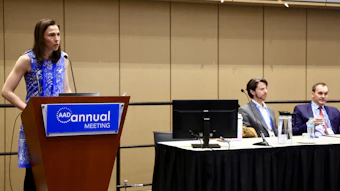
Gear up for a comprehensive overview of the rapidly evolving world of dermatologic treatments that represent the latest medical, surgical, and cosmetic advancements. This afternoon’s session, S035 – Therapeutic Hotline, will explore novel therapeutic options for conditions such as psoriasis, acne, rosacea, melanoma, and dyspigmentation as well as rare diseases and complex hair disorders.
The in-depth symposium, which features a panel of physicians and two interactive Q&As, will focus on practical clinical decision making and real world application of emerging treatment paradigms. Session director Seemal R. Desai, MD, FAAD, an associate professor of dermatology at the University of Texas Southwestern Medical Center in Dallas and immediate past president of the AAD, said the session will give dermatologists a range of tools to improve patient outcomes.
“The therapeutic landscape in dermatology continues to expand rapidly, with targeted, mechanism-driven therapies reshaping how we manage both common and complex skin diseases,” Dr. Desai said. “These therapies allow us to more precisely modulate disease pathways, offering improved efficacy and faster onset of action for appropriately selected patients.”
JAK inhibitors continue to lead momentum
According to Dr. Desai, one area in the spotlight is the use of JAK inhibitors to treat alopecia areata, vitiligo, atopic dermatitis (AD), and more. This treatment represents a major advance across inflammatory and immune-mediated conditions, he said.
“Within the JAK inhibitor class, both oral and topical agents have become important options for patients who have inadequate response, intolerance, or contraindications to traditional systemic therapies,” he said. “Recognizing when to escalate to newer therapies involves assessing disease severity, impact on quality of life, treatment fatigue, comorbidities, and patient preferences. In many cases, newer targeted agents allow for earlier intervention rather than reserving them strictly for refractory disease.”
Session panelist April W. Armstrong, MD, MPH, FAAD, a professor of dermatology at the University of California Los Angeles, will also speak to the benefits of JAK inhibitors. She said the strength of ruxolitinib cream provides rapid itch relief and anti-inflammatory control in mild-to-moderate AD and reinforces the value of targeted topical therapy.
“Roflumilast cream, a highly potent topical PDE-4 inhibitor, has shown meaningful anti-inflammatory activity with favorable tolerability, including in sensitive and intertriginous areas, and offers a steroid-sparing option for mild-to-moderate disease,” Dr. Armstrong said. “Tapinarof, an aryl hydrocarbon receptor agonist, modulates inflammatory pathways and improves barrier function. Together, these agents reflect a shift toward nonsteroidal, mechanism-based topical therapies that address both inflammation and barrier dysfunction in AD.”
Overall, she said, patients are benefitting from “a steady move toward more precise immune modulation, better tolerability, and more individualized treatment decisions across both psoriasis and atopic dermatitis.”
As for emerging oral treatment options, Dr. Armstrong said deucravacitinib continues to generate corroborated data as a selective TYK2 inhibitor for treating psoriasis — offering both meaningful long-term efficacy and safety.
“The next wave of oral agents is generating significant anticipation. Zasocitinib and envudeucitinib, both selective TYK2 inhibitors, have phase 3 data that is expected to be unveiled at the AAD Annual Meeting. Icotrokinra, a first-in-class oral IL-23 receptor antagonist, is also drawing attention as it represents a novel mechanism that directly interferes with IL-23 signaling upstream in the Th17 pathway,” Dr. Armstrong said. “These newer oral agents could meaningfully expand our oral armamentarium for moderate-to-severe psoriasis and potentially shift how we position oral therapies relative to biologics.”
Emphasis on understanding and applying emerging research
New research continues to shape treatment options. Dr. Desai said he will use the session to describe an important framework for physicians to responsibly evaluate cutting edge research. Key factors include:
- Understanding mechanisms of action
- Assessing safety profiles and long-term data
- Selecting the right patients for newer immunomodulatory therapies
- Interpreting evolving trial designs and real-world evidence
“Staying current with evolving trial designs, long-term extension studies, and post-marketing surveillance is critical, particularly with newer immunomodulatory agents such as JAK inhibitors,” Dr. Desai said. “Translating data into practice requires balancing innovation with thoughtful risk–benefit assessment and discussing when these therapies would be considered on- or off-label.”
A laser-focused step forward
Melanie Palm, MD, FAAD, an assistant professor of dermatology at the University of California San Diego, will highlight research insights in both dermatologic surgery and energy based devices. Among her talking points, she’ll dissect the findings of a recent paper published in the journal Facial Plastic Surgery, which provides consensus guidelines on the timing of lasers, injectables, and energy-based treatments in relation to facial surgery.
“This consensus paper of seven facial plastic surgeons and myself is an important guideline to discuss with patients undergoing nonsurgical aesthetic treatments in dermatology offices regarding planning and counseling for future surgical interventions,” she said.
A bold outlook
Dr. Desai emphasized the session will cover a lot of ground, but that it is designed to be highly practical and interactive, emphasizing real-world challenges clinicians face when incorporating new therapies.
“Our goal is to ensure attendees leave with actionable insights and a clear understanding of where therapeutic innovation is headed,” he said.
The session also includes speakers James Q. Del Rosso, DO, FAAD; Pearl E. Grimes, MD, FAAD; Joseph Merola, MD, MSc, FAAD; Darrell S. Rigel, MD, FAAD; Theodore Rosen, MD, FAAD; Jerry Shapiro, MD, FAAD; Linda F. Stein Gold, MD, FAAD; Elizabeth A. Swanson, MD, FAAD; Andrea Tesvich Murina, MD, FAAD; and Susan H. Weinkle, MD, FAAD.