Personalized approach, outlook for HS patients
Advanced in-office techniques use latest research and clinical guidance.
U009 – In-Office Surgical Techniques for the Treatment of Moderate to Severe Hidradenitis Suppurativa (HS)
7:30-8:30 a.m. | Friday, March 27
Mile High 4D
There’s renewed hope for patients diagnosed with moderate-to-severe hidradenitis suppurativa (HS). A series of medical and in‑office surgical techniques are markedly improving outcomes for patients with the chronic and often debilitating skin disease.
The latest treatment approaches, including laser hair reduction (LHR), cryoinsufflation, surgical deroofing, and CO₂ laser‑assisted procedures, are just some of the therapeutic pearls that will be spotlighted in today’s session, U009 – In-Office Surgical Techniques for the Treatment of Moderate to Severe Hidradenitis Suppurativa (HS). The session will cover everything from highlighting new data and recurrence rates to a look at practical guidance for physicians.
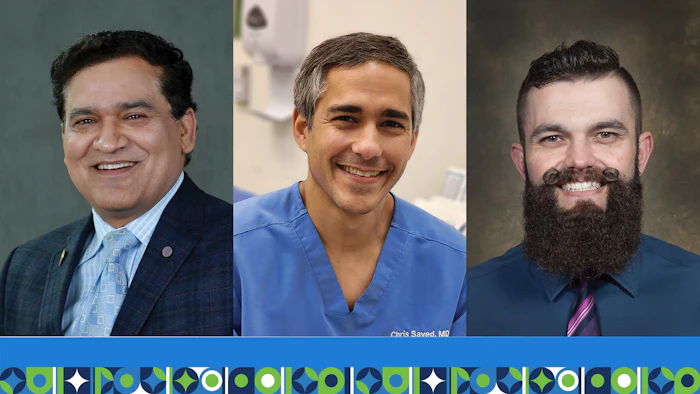
“Dermatologists are uniquely well-suited to HS management since we’re trained in both surgery and complex medical management and can use all of our skillsets to provide ideal care to patients,” said session panelist Christopher John Sayed, MD, FAAD, a professor of dermatology at the University of North Carolina School of Medicine in Chapel Hill.
Prepare for the road ahead
Most patients with HS need a combination of medical and surgical treatments for adequate control of their disease, said Akhil Wadhera, MD, FAAD, session director and dermatologist at Kaiser Permanente Northern California. Unfortunately, HS tends to relapse soon after medical therapies are discontinued for any reason, he said. Surgical treatments like deroofing surgery can be curative for many patients, unlike most medical treatments that only control the disease while the patient is on these treatments.
According to Dr. Wadhera, dermatologists have adequate training and the skills to perform simple deroofing procedures in outpatient settings. Special training or fellowship is not necessary for achieving excellent outcomes for most HS patients needing surgical treatments.
“Most patients are extremely grateful to undergo LHR and deroofing surgical procedures as these treatments can not only be remittive but also can be done in office settings under local anesthesia with shorter recovery times compared to traditional surgical treatments requiring flaps and grafts that require general anesthesia and much longer recovery periods,” Dr. Wadhera said. “Most patients would recommend undergoing these procedures to their friends and family.”
Determine the best candidates for dual approach
Drs. Sayed and Wadhera said deciding the best course of in-office medical and surgical treatment for patients with moderate-to-severe HS should incorporate several considerations, such as:
- Chronic, persistent lesions lasting three to six months despite adequate medical therapy.
- Tunneling under the skin that connects multiple lesions.
- Granulation tissue protruding from inflammatory lesions, indicating established, tunnel‑based disease.
HS medication treatments are often a first-line choice, said session panelist Steven Daniel Daveluy, MD, FAAD, as they are designed to reduce inflammation, which means less erythema, swelling, and hopefully drainage. Dr. Daveluy is a professor at Wayne State University in Detroit.
“This is an important concept for dermatologists treating HS. Medication should prevent or at least slow the development of new lesions,” Dr. Daveluy said. “Changing medication regimens won’t treat those recurrent/persistent lesions. Usually, we start medical therapy and get things as calm as possible, then we reassess to see if some lesions require surgery.”
Although not widely available due to limited insurance coverage, LHR is an effective and patient‑preferred surgical treatment for early HS disease due to its low side effect profile and ability to target the follicular basis of the disease, Dr. Wadhera said.
“Since inflammation of the hair follicles is thought to be the primary cause of HS lesions, removing hair follicles by using LHR has shown to control HS disease in approximately 60–70% of patients treated as shown in several studies,” Dr. Wadhera said. “It can also help prevent the progression of the disease, given the folliculo-centric origin of HS lesions.”
Additionally, he said LHR can be used for patients with dark terminal hair as well as patients with all skin types (Alexandrite lasers for skin type I-III and NdYAG laser for skin types IV-VI).
Cryoinsufflation: A less invasive surgical alternative
Cryoinsufflation is an emerging technique for patients reluctant to undergo more invasive surgery, Dr. Daveluy said.
The method involves injecting liquid nitrogen directly into HS tunnels, destroying the epithelial lining. A variation, punch‑assisted cryoinsufflation, uses a punch tool to access and treat tunnels or abscesses without a visible opening. According to Dr. Daveluy, early case studies show seven out of 10 patients achieve resolution after one punch‑assisted treatment.
Cryoinsufflation requires no anesthesia and can be repeated every four to six weeks. Dr. Daveluy said he often uses the technique for patients awaiting more extensive surgeries, allowing some lesions to resolve beforehand.
“I reach for cryoinsufflation in patients who require surgery but are averse for any reason and won’t proceed. It offers a less invasive surgical option, though the outcome is harder to predict,” said Dr. Daveluy. “In patients with many tunnels, I often schedule their surgery or surgeries and then offer a series of cryoinsufflation treatments in the time leading up to their surgical appointments. Some lesions may resolve and not require surgery, and it offers something we can do at regular clinic appointments, since my surgery slots often book out a couple months.”
Surgical and CO₂ laser‑assisted deroofing: Tissue‑sparing and effective
Deroofing procedures — performed in either the clinic or the OR — are becoming increasingly common, Dr. Daveluy said. Recurrence rates average 20–25%, though recurrences tend to be mild, and more than 85% of patients report high satisfaction. Additionally, the technique preserves healthy tissue, resulting in smaller, shallower wounds that heal more quickly, he said.
Postoperative deroofing care typically includes petrolatum, nonstick bandages, and absorbent dressings for the first few days. Because healing occurs by secondary intention, patients can resume activity as soon as pain allows, Dr. Daveluy said.
Among procedural options, he said CO₂ laser‑assisted deroofing demonstrates the most promising recurrence rates.
“Due to its ability to control the bleeding (minimal bleeding) as the laser cuts the skin, the visualization of the tunnels and the tunnel goop (invasive proliferative gelatinous material in the tunnels) is much better compared to traditional surgical excision techniques,” Dr. Wadhera said.
This method allows for the treatment of larger areas in one session and healing typically requires six to 12 weeks depending upon the extent of the area deroofed, said Dr. Wadhera. Patients typically return to work within one to two weeks with minimal pain. Side effects vary by procedure but are generally manageable with telemedicine follow ups. According to him, better visualization and the thermal effects of the CO₂ laser may be contributing to the lower recurrence rates seen with CO₂ laser-assisted deroofing.
A proven track record
Ultimately, the presenters underscored the importance of a combination medical and surgical approach for meaningful HS control. Dermatologists are highly trained to offer both.
“The necessary skills and techniques are very similar to procedures included in our training, like excisions, electrodessication and curettage, and cryotherapy, so we already know them and just need to apply them to HS lesions,” Dr. Daveluy said. “Start with a small lesion the first time. You and the patient will be thrilled with the results and eager to continue.”
Iltefat H. Hamzavi, MD, FAAD, will also be participating in this panel.