What’s up, doc?
Leading dermatologists will examine new and noteworthy developments in this rousing Tuesday session.
S065 – What’s New in Dermatology
10:15 a.m.-12:15 p.m. | Tuesday, March 31
Four Seasons 1
As the 2026 AAD Annual Meeting kicks off today, Tuesday may seem like the distant future. But don’t forget to mark your schedule for the upcoming session, S065 – What’s New in Dermatology. In this symposium, dermatologists will take turns presenting the latest and greatest advancements in popular subspecialties.
Topical therapy
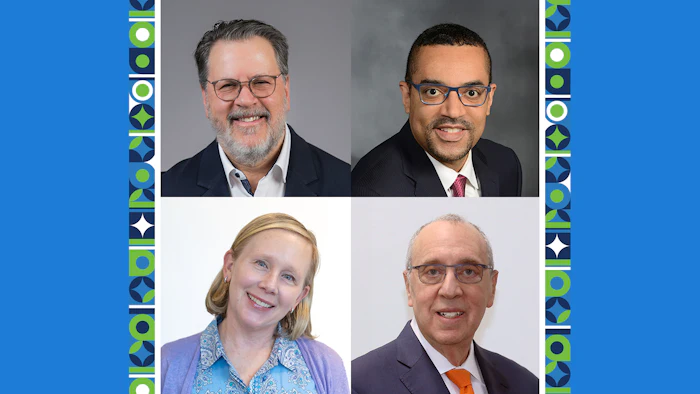
According to panelist Brad P. Glick, DO, MPH, FAAD, the most exciting update in topical therapies is the FDA’s approval of delgocitinib — a cream for chronic hand eczema (CHE), which is unique and difficult to treat.
“Delgocitinib is a first-in-class, topical, pan-JAK inhibitor, which has the potential to improve lives of individuals suffering from this chronic skin condition with a previously significant unmet need,” said Dr. Glick, who is assistant clinical professor of dermatology at Herbert Wertheim College of Medicine in Miami.
Dr. Glick will also discuss the importance of ruxolitinib, tapinarof, and roflumilast as topical, nonsteroidal therapies for atopic dermatitis (AD). The three drugs are now FDA-approved to treat adults and children as young as two years old, providing more options for AD management.
Vitiligo and other disorders of pigmentation
The excitement continues in the field of vitiligo and disorders of pigmentation, where Andrew F. Alexis, MD, MPH, FAAD, will review the pipeline of medications under FDA consideration. Dr. Alexis is a professor of clinical dermatology at Weill Cornell Medicine in New York City.
“The management of pigmentary disorders has evolved to include a broader range of therapies, including multiple alternatives to hydroquinone for hyperpigmentation and JAK inhibitors for vitiligo,” Dr. Alexis said. “These therapies show promise for treating patients with more extensive skin involvement.”
Pediatric dermatology
Elizabeth Swanson, MD, FAAD, will discuss how AD impacts growth in pediatric patients. Dr. Swanson is a pediatric dermatologist at Ada West Dermatology and St. Luke’s Children’s Hospital in Boise, Idaho.
“Kids with AD tend to be small on growth curves, and for years, we wondered why,” she said. “While it is probably multifactorial, a big reason for it boils down to sleep.”
Dr. Swanson said children who have AD don’t sleep as soundly and also don’t get enough REM sleep, which is essential to physical and neurological development.
“It’s during REM sleep that growth hormone is secreted, so physiologically the child has less growth hormone,” she said. “Growth hormone also contributes to bone strength and development, which helps explain the increased osteoporosis, osteopenia, and fractures in people with AD.”
Luckily, said Dr. Swanson, clinical trials of dupilumab in children ages six to 11 have shown robust success in enhanced growth trajectory and increased bone growth biomarkers — a clinically meaningful advancement with numerous optimistic repercussions.
“Oftentimes, the significance of AD can be minimized, and families don’t realize the full impact of the disease,” Dr. Swanson said. “This data helps show families that AD is a big deal and that treatment of it results in really positive outcomes above and beyond the skin.”
Cutaneous malignancy
Darrell S. Rigel, MD, MS, FAAD, clinical professor of dermatology at NYU Grossman School of Medicine, will examine what’s new regarding skin cancer, which continues to be a leading concern as one out of five Americans develop skin cancer during their lifetime. Dr. Rigel is also adjunct professor of dermatology at UT Southwestern Medical School and a consultant dermatologist at Cooper Clinic in Dallas.
“New therapies for advanced disease and new diagnostic applications integrating AI and using genomics to better assess prognosis are among the newest information that will be presented,” he said. “Integrating these into practice will positively impact patient care.”
And more!
Other topics and presenters included in the Tuesday session are:
- Atopic dermatitis – April W. Armstrong, MD, MPH, FAAD
- Dermatologic therapy – Mark Lebwohl, MD, FAAD
- Hidradenitis suppurativa – Bruce Elliot Strober, MD, PhD, FAAD
- Surgical dermatology – Murad Alam, MD, MSCI, MBA, FAAD