Chronic spontaneous urticaria
New therapies, new perspectives on an existing condition.
F098 – Chronic Spontaneous Urticaria: A Review of the Basics and New and Emerging Drugs
3:30–5:30 p.m. | Monday, March 30
Mile High 4D
Chronic spontaneous urticaria (CSU) affects around 1% of Americans, but the worldwide prevalence of CSU is closer to 20%. Though it is often associated with allergies, CSU is considered a mast cell-mediated inflammatory disease driven in part by immunoglobin E (IgE) and/or immunoglobin G (IgG) autoantibodies. It can result in near daily pruritus and wheal formation with or without angioedema.
“The disease burden is significant,” said Walter Liszewski, MD, FAAD, associate professor in the department of dermatology at Northwestern University in Chicago. “The unpredictable and chronic nature of the disease may lead to increased mood disorders, interference with daily activities, and substance abuse.”
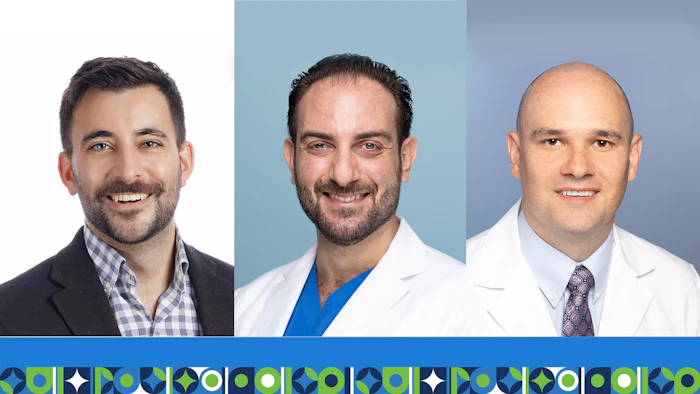
Dr. Liszewski is one of a trio of panelists who will discuss CSU, its pathologies, and potential new treatments in Monday’s session, F098 – Chronic Spontaneous Urticaria: A Review of the Basics and New and Emerging Drugs.
Within the past year, Dr. Liszewski said two novel therapies have been approved for the treatment of CSU: remibrutinib and dupilumab.
“Remibrutinib is particularly significant as it is the first oral, CSU-specific drug on the market,” he said. “It belongs to a class of small-molecule agents called Bruton Tyrosine Kinase (BTK) inhibitors. Notably, the remibrutinib phase 3 trials (REMIX-1 and REMIX-2) investigated how well the medication controls angioedema — swelling of the eyelids, lips, and hands — which affects one-third of CSU patients, rather than focusing solely on traditional wheals.”
“Remibrutinib also exhibits quite an early response as well, given that it acts as central to both the autoimmune and autoallergic pathways in CSU through BTK inhibition,” added session panelist Naiem Issa, MD, PhD, FAAD, medical director of research and academics at Forefront Dermatology in Vienna, Virginia.
Session panelist Jason Hawkes, MD, MS, FAAD, co-owner, chief scientific officer, and investigator at Oregon Medical Research Center in Portland, said that dupilumab demonstrated efficacy for both wheals and angioedema as part of its phase 3 LIBERTY-CSU CUPID clinical trial.
“This approval for CSU expands the total number of approved indications for dupilumab to eight, underscoring its ability to regulate type-2 inflammation via blockade of both IL-4 and IL-13,” said Dr. Hawkes. “Like remibrutinib, dupilumab showed efficacy in the treatment of both wheals and angioedema irrespective of baseline IgE levels or BMI with injection site reaction as the only reported adverse event in the FDA-approved label. However, unlike remibrutinib, dupilumab is approved in both adults and adolescents 12 years and older.”
There are several unique molecular mechanisms that Dr. Hawkes said may contribute to CSU, including c-KIT and JAK/STAT signaling. For example, cKIT is the primary molecular signal driving the survival, proliferation, and differentiation of mast cells — which can cause allergies and anaphylaxis when triggered inappropriately.
“Targeting this pathway has the potential to inhibit activation or deplete mast cells in the body, which in turn has the potential to treat all forms of urticaria beyond specific disease variants such as CSU,” Dr. Hawkes said. “However, c-KIT expression is not limited to mast cells alone, thus increasing the risk for unintended or adverse events, such as dyspigmentation of the skin and hair or effects on the bone marrow leading to cytopenias.”
Dr. Issa, who is also an assistant professor at the Dr. Phillip Frost Department of Dermatology and Cutaneous Surgery at the University of Miami Miller School of Medicine in Florida, said using JAK inhibition in CSU is also of interest given the role of the mast cell pathway in regulating multiple inflammatory signals. However, he said more research is needed.
“The function of this specific kinase family in mast cells and urticaria subtypes remains unclear, especially given the strong link between autoantibodies, BTK signaling, and the high-affinity IgE receptor,” he said. “Ongoing, early clinical trial programs for these two novel treatments will help determine where they fit into the current treatment algorithm for CSU.”
Dr. Liszewski said dermatologists see these patients regularly and should be aware that while most cases are managed with antihistamines, as many as 50% of patients remain inadequately treated despite four-fold dosing with a single agent. This is why new therapies are in high demand.
“Many new treatment options exist for those who are not well-controlled with antihistamines,” he said. “Furthermore, because approximately half of CSU cases last more than five years, there is medical need for treatments that provide sustainable, long-term control.”
As more research continues, Dr. Issa said dermatologists will need to stay on top of the latest treatment options available for CSU and other forms of urticaria.
“Mast cell biology is complex with a variety of signals that lead to different manifestations of urticaria, such as the MRGPRX2 receptor,” Dr. Issa said. “As our understanding of mast cell biology evolves, dermatologists should become more familiar with the therapeutic horizon and novel treatments targeting these pathways.”