A hairy situation
New and upcoming treatments hold potential to help regrowth and scarring in hair disorders.
S027 – Updates in Hair Disorders
9 a.m.-noon | Saturday, March 28
Four Seasons 4
Dermatologists diagnose or treat hair disorders nearly every day. Most commonly these include alopecia areata, androgenetic alopecia, acute and chronic telogen effluvium, and cicatricial alopecia.
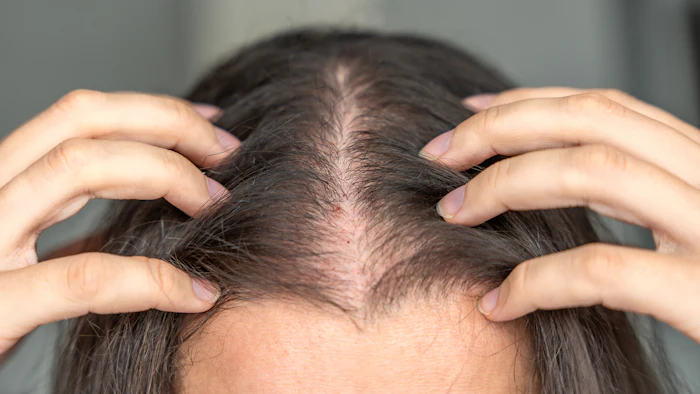
Frontal fibrosing alopecia is a relatively newer dermatologic condition that is increasing in frequency, said Jerry Shapiro, MD, FAAD, professor and director of disorders of the hair and scalp in the Ronald O. Perelman Department of Dermatology at New York University’s Grossman School of Medicine in New York City. The condition affects both men and women, but Dr. Shapiro said he sees it more in women who are menopausal.
“The immune system is attacking the stem cells of the hair follicle and causes scarring of the scalp in a band-like fashion mostly in the front but also behind the ears and back of the scalp,” he said.
 Jerry Shapiro, MD, FAAD
Dermatologists diagnose frontal fibrosing alopecia by using trichoscopy and looking carefully for perifollicular scale and redness. There may also be scarring or lack of follicular ostia, and a scalp biopsy may be necessary. However the diagnosis is made, Dr. Shapiro said the condition must be treated aggressively and right away.
“This is a ‘trichologic emergency.’ Every hair lost from this condition is gone forever,” he said. “An algorithm of what to do includes injections of cortisone, hydroxychloroquine, doxycycline, 5 alpha reductase inhibitors, JAK inhibitors topically or orally, topical tacrolimus, and low-dose naltrexone as well as other immunomodulating drugs.”
Alopecia updates
Session presenter Natasha Atanaskova Mesinkovska, MD, PhD, FAAD, vice chair of dermatology clinical research at the University of California Irvine, said JAK inhibitors are one of the most promising areas of treatment when it comes to inflammatory alopecias.
“Oral JAK inhibitors have shown a robust efficacy in moderate-to-severe alopecia areata, with multiple phase 3 trials demonstrating meaningful scalp hair regrowth in a significant proportion of patients, along with growing long-term safety and durability data,” she said.
 Natasha Atanaskova Mesinkovska, MD, PhD, FAAD
“Upadacitinib is a medication which is not currently [FDA] approved for alopecia areata, but it has emerging evidence from case series and real-world experience,” she said.
Another exciting investigational approach to alopecia areata is rezpegaldesleukin. Dr. Mesinkovska said this long-acting, engineered interleukin-2 therapy is designed to selectively expand regulatory T cells while limiting the activation of pro-inflammatory effector T cells.
“Rather than broadly suppressing the immune system, this strategy aims to restore immune tolerance, which may ultimately support more durable disease control and remission,” she said.
Another type of alopecia that predominantly affects Black women is central centrifugal cicatricial alopecia (CCCA). Session presenter Crystal Ugochi Aguh, MD, FAAD, said it can cause significant scarring of the scalp even if there is minimal inflammation present. Dr. Aguh is an associate professor of dermatology and director of the Ethnic Skin Program at Johns Hopkins School of Medicine in Columbia, Maryland.
“Typically, the amount of scarring you see is commensurate with the amount of inflammation, so if someone has a lot of inflammation for a very long time you expect to see a lot of scarring,” she said. “Patients with CCCA can have some of the worst evidence of scarring that we see among scarring alopecias, but each visit they may say, ‘My scalp’s not red, it’s not really painful, and it’s not really itching.’ So, it makes treatment very difficult.”
Fortunately, Dr. Aguh said there are several treatments that have shown to be effective, including standard treatments such as anti-inflammatories, steroids, or tetracycline-related antibiotics. But there is a newer treatment on the horizon, she said, that came from an unexpected source.
“Metformin is typically used to treat diabetes and prediabetes, but we have been able to repurpose it as a treatment for CCCA,” she said.
The idea to use metformin to treat CCCA came out of a molecular study that Dr. Aguh was part of several years ago. In the study, researchers were trying to characterize the gene expression profile of the scalp in patients with CCCA.
“We saw an increased expression of a lot of profibrotic markers that really demonstrated that CCCA is similar to diseases of abnormal scarring like pulmonary fibrosis and systemic sclerosis,” she said. “Metformin has been used off-label to help scarring in those conditions, so we initially started to apply topical metformin to the scalp of patients, and we found that it could be effective in some patients with CCCA.”
That topical use eventually evolved into the use of oral metformin tablets when it was discovered that there is an overlap between patients with CCCA and those with a higher risk of type 2 diabetes.
“When we treated these patients with metformin and took samples of their scalp pre- and post-treatment, we saw a reversal of those fibrotic genes that we had identified in prior studies and we saw an increase in the expression of carotin-related genes, which is basically a sign of hair growth,” Dr. Aguh said.
Ultimately, she said the treatment of CCCA can involve several different therapies, of which metformin may be a vital component.
“The ideal treatments for CCCA are going to be medications that both treat inflammation and treat abnormal scarring,” Dr. Aguh said. “So, metformin would be on that list, but so would steroids and tetracycline medications. Those continue to make sense as standard treatments and metformin can be considered an adjunct treatment in the right patient.”
Minoxidil updates
In addition to JAK inhibitors and steroids, one of the most common treatments for hair loss conditions is minoxidil. Panelist Elise Olsen, MD, FAAD, professor of dermatology and medicine at Duke University Medical Center in Durham, North Carolina, said low-dose oral minoxidil (LDOM) is an effective treatment for most patients with both scarring and non-scarring alopecia.
Dr. Olsen is also founder and director of the Cutaneous Lymphoma Research and Treatment Center and the Hair Disorders Research and Treatment Center at Duke. Her presentation will highlight LDOM treatments and side effects and will also review a paper she co-authored, “Summation and Recommendations for the Safe and Effective Use of Topical and Oral Minoxidil,” published in the Journal of the American Academy of Dermatology.
“LDOM will be used long term, so it’s important that dermatologists know how to anticipate who is at risk for side effects and how to prevent or treat those side effects,” said Dr. Aguh. “I’ll talk about what we now know related to the current use of Loniten tablets for hair loss and what information is forthcoming about two preparations that are undergoing pivotal FDA trials: a sublingual minoxidil and an extended-release oral minoxidil.”
Aging updates
Regardless of type or treatment, one of the challenges in dealing with hair loss is how hair changes as we age from birth to adult and mature life.
“These [changes] include hormonal-dependent and hormonal-independent changes as well as changes due to environmental exposures,” said session presenter Antonella Tosti, MD, professor of dermatology and cutaneous surgery at the University of Miami in Florida. “Most important mechanisms are similar to general body aging and include stress, DNA damage and repair, inflammation, and hormones.”
 Antonella Tosti, MD
“The idea of senescent alopecia is not confirmed by the data we have,” she said. “Very typical signs of hair senescence include a drop in the sebum production, a loss of pigmentation, and coarseness of the hair fibers.”
The panel will also include Rodrigo Pirmez, MD; Lidia Rudnicka, MD, PhD, IFAAD; Leopoldo Santos, MD; Leonard C. Sperling, MD, FAAD; Sergio Vano-Galvan, MD, PhD, IFAAD; and Wenyu Wu, MD, who will provide updates on items like mesotherapy, dermoscopy, hair transplantation, and more.