Seeing is believing
Learn how AI can improve optical imaging, assist dermatopathology, support clinical decision-making, and enhance care.
Artificial intelligence (AI) is making inroads across all areas of medicine, and dermatology is no exception. According to Manu Jain, MD, physicians are seeing benefits from the use of AI, and optical imaging is one field where it is being increasingly integrated into practice.
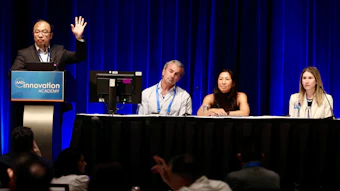
Dr. Jain will be part of a panel discussing this and other dermatologic advances in today’s session, POH07 – AI/Technology in Dermatology.
Optical imaging technologies, such as reflectance confocal microscopy, optical coherence tomography, and line field confocal OCT, can noninvasively assess skin cancers to aid in bedside diagnosis and management, said Dr. Jain. But even these methods have their limits and can be enhanced with AI.
“Their adoption has been limited by the expertise needed to interpret them. AI can help overcome this barrier by automating image analysis, highlighting suspicious features, and supporting clinical decision-making,” said Dr. Jain, who is an optical imaging specialist in the department of dermatology at Memorial Sloan Kettering Medical Center in New York.
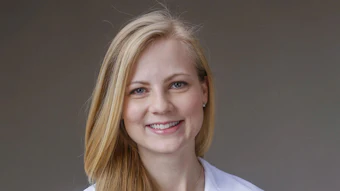
 Manu Jain, MD
One of the biggest benefits AI can bring to dermatologic imaging, Dr. Jain said, is that it can make advanced optical imaging easier to use.
“AI can improve diagnostic consistency, reduce interpretation time, detect subtle imaging features, and help physicians monitor disease over time,” she said. “This has the potential to expand access to technologies that have traditionally required specialized training.”
That’s not to say that there aren’t challenges ahead for AI, Dr. Jain said. Integrating AI into workflows requires large, diverse imaging datasets and the guarantee that algorithms can perform well across different devices and patient populations. One of the biggest challenges though, she said, will be simply understanding what AI’s place is within the medical workflow. It is important to recognize AI as another tool in the toolbox, rather than a miracle solution, she said.
“AI should support clinical decision-making rather than replace physician expertise.”
Another area where AI could play a big role is teledermatology. Dr. Jain said images acquired with optical devices are already in digital formats and can be easily transferred to an expert reader for interpretation.
“As high-quality images are central to remote reading, AI can help by assessing image quality, prioritizing suspicious lesions, and assisting with interpretation,” she said. “As portable imaging devices become more widely available, AI has the potential to bring advanced optical imaging beyond specialist centers and into primary care or underserved communities.”
Today’s session will also feature presentations from Martin Kassir, MD, FAAD; Natalia Khosla, MD, MSc; and Babar K. Rao, MD, FAAD; who will provide real-world examples of a variety of AI applications in dermatology, including robotics, dictation tools, and digital skin mapping.