The sweet science of dermatologic surgery
Get tips to up your surgical game — from improved skin cancer treatments to managing patient anxiety.
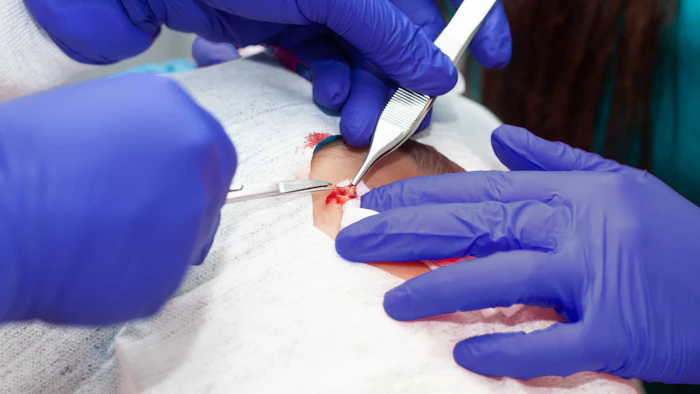
P018 – Advancing Your Dermatologic Surgery Procedures and Practice
8:45-10:45 a.m. | Sunday, July 19
Sutton North
Advances in dermatologic surgery can extend far beyond the clinic and surgical procedure itself. They can include everything from practical technologies that enhance surgical precision and efficiency to emerging tools for predicting skin cancer outcomes and techniques for preserving critical facial nerve anatomy.
 Sumaira Aasi, MD, FAAD
“The common thread is actionable knowledge — whether it’s a simple modification that improves surgical performance, a framework for managing high-risk tumors, or an approach to addressing barriers to treatment,” said Dr. Aasi, who is a professor of dermatology and director of Mohs and dermatologic surgery at Stanford Medicine in California. “We designed this session so that every attendee, from the beginning surgeon to the most experienced dermatologic surgeon, will leave with some practical knowledge pearls they can immediately apply to patient care.”
Access is key
 Taha Rasul, MD
“While many of the most underserved skin cancer patients are found in rural communities, there are many patients hiding in plain sight in urban areas at safety net systems, free clinics, and county hospitals,” he said. “Even when skin cancer is diagnosed, patients often face barriers to definitive treatment due to cost, transportation, specialist shortages, or fragmented referral pathways.”
Whatever the reason or the barriers, Dr. Rasul said dermatologists can address these challenges through a dual-pronged approach that combines direct patient care and network building with broader policy and advocacy efforts to create sustainable access to care.
“Improving access is critical because delayed treatment can lead to larger, more complex tumors, increased morbidity, and, in some cases, preventable mortality,” he said.
The power to predict
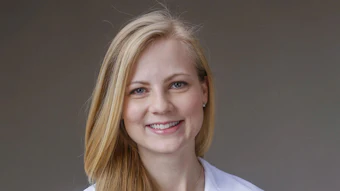
But you can’t treat any type of cancer until it is first diagnosed. Kathryn Shahwan, MD, FACMS, FAAD, said one such tool dermatologists can use is riSCC, a data-driven mobile app designed to aid physicians in determining the risk stratification for cutaneous squamous cell carcinoma (cSCC) in clinical settings. Dr. Shahwan is an associate professor of dermatology and Mohs surgery at Ohio State University Medical Center in Columbus.
 Kathryn Shahwan, MD, FACMS, FAAD
Another newer tool, Dr. Shahwan said, is the COMPASS staging system, which assesses cSCC by incorporating risk factors with traditional staging methods. It is designed to provide a more personalized risk assessment for the recurrence and spreading of tumors.
“Using these tools can provide a better grasp on how to predict tumors that are most likely to go on to develop poor outcomes, which will help guide work-up and management, such as thresholds for ordering baseline and surveillance imaging and referring for neoadjuvant/adjuvant therapy,” said Dr. Shahwan.
Precision through knowledge and technology
 Junqian Zhang, MD, FAAD
“These areas are at highest risk of injury because of the intrinsic anatomy of the course of the nerve as well as the thinner tissue layers overlaying the nerve branches in those particular anatomic areas,” said Dr. Zhang. “I will use surgical cases as well as cadaver dissection photos and video to illustrate the anatomy as it pertains to dermatologic surgery in these areas.”
 Arif Aslam, MBChB
“There are plenty of techniques to minimize discomfort during local anesthetic administration, such as the use of buffered lidocaine, slow injection with a 30G half-inch needle, distraction techniques — such as sitting down, stress balls, and tapping on the forehead — and communication strategies to establish rapport and reduce anxiety from the outset,” Dr. Aslam said.
There are also techniques dermatologists can use in the postoperative setting to ease patient anxiety, such as managing their postop expectations prior to surgery, he said.
“This can be done through the use of drawings, expectation setting, and visual explanations,” said Dr. Aslam. “Other examples of postoperative strategies include routing evening follow-up phone calls and direct access for concerns as well as following up at one week with planned follow-up at four weeks for all patients.”
 Zain Sayed, MD, FAAD
“These small, portable devices with simple modifications can improve diagnostics, surgical outcomes, and staff communication,” said Dr. Sayed, who is surgical director and lab director for the Mohs and Skin Surgery Center at Skin Care Specialty Physicians in Lutherville, Maryland.
 Charlene Lam, MD, MPH, FAAD
“Simple surgical skills don’t necessarily mean easy execution,” she said. “Mastering the fundamentals is what transforms good outcomes to great ones.”