Harnessing hair health
Diagnosing and managing hair loss requires the latest treatments and a personal touch.
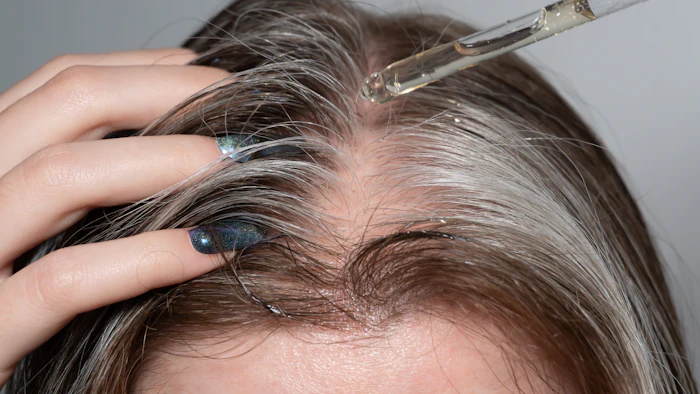
Diagnosing and managing hair loss and scalp disorders with both old and new treatments was the focus of the Innovation Academy session, P016 – Managing Hair Disorders. Whether the underlying factor is a chronic condition or hormonal changes, one thing most hair loss patients have in common is the impact it can have on their lives.
“Culturally, hair plays a big role in a person’s identity and self-expression. Therefore, the loss of it can have a huge impact on the individual,” said Carolyn Goh, MD, FAAD, clinical professor of dermatology at the UCLA David Geffen School of Medicine. “I’ve had patients say their hair was their one great asset, and now they don’t know what to do if it isn’t as great as it used to be.”
Dr. Goh, who served as session director, said hair loss can often be associated with illness, especially cancer. This association has led to the stigmatization of the condition — something dermatologists must be cognizant of when caring for patients with hair loss issues.
“Expressing a lot of empathy for patients may feel like it takes more time, but it actually saves time in the long run because patients feel heard and understood, making it easier to move forward and offer practical solutions,” she said. “Trying to stay goal-oriented helps as well. Patients often want to understand the root cause — no pun intended — of their hair loss but ultimately want treatment options, which we do have for them.”
Hair loss in menopausal women
Hair loss can affect all age groups from children to menopausal women. Session presenter Paradi Mirmirani, MD, FAAD, senior dermatologist at the Permanente Group in Northern California, said that time of life is critical in terms of the hair follicle.
 Paradi Mirmirani, MD, FAAD
Dr. Mirmirani said there are several factors that can contribute to hair loss in women as they get older.
“Depending on individual genetic susceptibility, metabolic health, environmental exposures, and immune programming, this disruption may lead to female pattern hair loss, chronic telogen effluvium, frontal fibrosing alopecia, traction alopecia, or scalp dysesthesia,” she said. “In other words, patients may experience a midlife hair crisis.”
Then the question becomes how to treat this midlife hair crisis. Dr. Mirmirani said recognizing that menopause is a high-risk period for follicular dysfunction could allow for earlier identification and personalized therapeutic strategies, which could include a combination of hormonal, metabolic, and inflammatory treatments. However, she cautioned that estrogen is not a viable tool in that box.
“Currently, the data do not support the use of estrogen replacement as an effective treatment for hair loss in peri/menopausal women,” she said. “However, there are effective strategies for using a holistic approach to the patient.”
Dr. Mirmirani said she categorizes this approach into four areas:
- Hair growth support, such as minoxidil
- Anti-androgen treatments, including finasteride, dutasteride, and spironolactone
- Anti-inflammatory treatments
- Lifestyle medicine, such as improved metabolic health, alternative hair care, and avoidance of environmental triggers
Hair loss in children
Cathryn Sibbald, MD, FAAD, a pediatric dermatologist in Toronto, said the most common disorders in children are:
- Telogen effluvium — an acute, stress-induced nonscarring hair loss that is often self-limited and related to medical or psychosocial stressors
- Alopecia areata — autoimmune or nonscarring hair loss
- Androgenetic alopecia — male or female pattern hair loss, often presenting around the age of puberty
- Tinea capitis — a fungal infection often known as ringworm of the scalp
- Trichotillomania — pulling out one’s own hair
 Cathryn Sibbald, MD, FAAD
“Minoxidil, minoxidil, minoxidil!” she said. “It has the best evidence for treating hair loss. Oral minoxidil use has skyrocketed and is being used in both children and adults with generally good results.”
Hair loss in men
Prince Adotama, MD, FAAD, assistant professor of dermatology in the Ronald O. Perelman Department of Dermatology at New York University Grossman School of Medicine, said that male pattern hair loss is the most common form of hair loss in men, affecting well over 50% of men. That percentage increases as men get older.
 Prince Adotama, MD, FAAD
Scarring alopecia, on the other hand, has become more common in men in recent years, though it remains more prevalent among women. This is a tougher condition to treat than nonscarring alopecia because not as much is known about it, he said.
“The etiologies are still poorly understood, and the treatment options are limited,” Dr. Adotama said. “There are currently no FDA-approved therapies for scarring alopecia in men. Stabilization is a much more realistic goal for scarring alopecia than growth, so it’s important to diagnose and treat it early in the disease process.”
An armory of approaches
 Carolyn Goh, MD, FAAD
“Topical steroids, especially, but now we have nonsteroidal options to help with concomitant scalp disorders,” she said. “These also may help directly with inflammatory types of hair loss such as scarring alopecias. We also use a lot of ketoconazole shampoos, including selenium sulfide, zinc pyrithione, and salicylic acid.”
There are also effective medications that target hormones, specifically those that block testosterone and its effects, that are becoming more commonly used for hair disorders.
“These are treatments like finasteride, dutasteride, and spironolactone,” said Dr. Goh. “While finasteride is FDA-approved for male pattern hair loss, dutasteride is only approved in other countries. Spironolactone is used off-label in women and the same can be said for finasteride and dutasteride.”
JAK inhibitors
 Michelle Oboite, MD, FAAD
“Previous traditional treatments, including potent immunosuppressants, have displayed variable effectiveness, often with undesirable side effects,” she said. “Targeted therapies such as JAK inhibitors have led to dramatic improvement in severe disease — even when recalcitrant to other treatments — with better tolerability.”
While JAK inhibitor research is ongoing, the treatment shows great promise for many types of hair conditions, said Dr. Oboite, who is also an attending physician in the department of dermatology at the Hospital of the University of Pennsylvania in Philadelphia.
“Currently, systemic JAK inhibitors are FDA-approved for only alopecia areata,” Dr. Oboite said. “But with continued research and clinical experience we are learning more about what other types of alopecia may benefit, which individuals are best candidates, and long-term considerations for treatment in different populations.”
Whatever the condition or treatment, Dr. Goh said it is important for dermatologists to be sensitive to the ways in which hair loss can impact the lives of their patients and to develop treatment plans with that impact in mind.
“Hair and scalp disorders seem to be getting more and more common, or at least more recognized,” Dr. Goh said. “Working closely with patients to develop appropriate management and treatment plans can be extremely rewarding, and the tools we have to treat hair loss have improved and will continue to improve over time.”