To 2040 and beyond
The Future of Dermatology symposium will take a candid look at how the specialty may evolve over the next several decades.
It’s natural to get tunnel vision when daily practice feels like a revolving door of patients and problems. That’s why members should attend the session, F001 – Future of Dermatology: Dermatology Beyond 2040, occurring Thursday afternoon of the AAD 2026 Innovation Academy.
Director Hensin Tsao, MD, PhD, FAAD, professor of dermatology at Harvard Medical School, will set the stage for how the specialty is changing and where that could lead dermatologists in the short- and long-term.
 Hensin Tsao, MD, PhD, FAAD
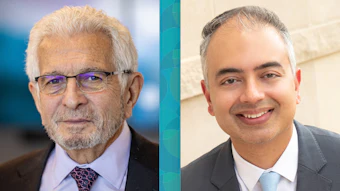
The first part of the session will feature two lecturers who will build a potential framework and offer unique perspectives on what’s to come. Allan C. Halpern, MD, FAAD, will examine the next generation of imaging devices, and Eugene Semenov, MD, MS, FAAD, will speak about the integration of artificial intelligence (AI). Dr. Tsao said both subjects are seminal to the specialty and will greatly impact routine practice.
“Dermatology has always been a highly visual, pattern-based specialty, which puts us at the leading edge of advances in imaging and AI,” Dr. Tsao said. “That means our field may become one of the earliest tests of how medicine blends human expertise with increasingly capable digital systems, and this symposium is about preparing thoughtfully for that rather than being swept along by it.”
In the second part of the session, investigators will test the concepts put forth by Drs. Halpern and Semenov against real-world data, said Dr. Tsao. The abstract presentations, which were selected by Dr. Tsao and the other session co-directors, will focus on early phase trials and novel therapeutics, innovative procedures/devices, and applications of AI in alignment with the theme of the session.
“We will review work that is not only original but demonstrates a credible path to real clinical impact,” he said. “Innovation alone is not enough; we need solutions that address validation, workflow integration, scalability, equity, and regulatory readiness — those are the factors that decide whether a technology actually changes care or stays an interesting prototype.”
Dr. Tsao said he hopes attendees bring an open mind to the session, with willingness and enthusiasm to receive, evaluate, and envision these ideas of transformative innovation.
“The next generation of advances may redefine how we diagnose disease, monitor patients, and interact in the clinic, and this session is a chance to think collectively about what kind of future we actually want to build,” he said. “My goal is for attendees to leave both energized about 2040 and prepared to ask sharper questions of every new tool that crosses their desk.”