Pulling back the curtain on HS
Two Sunrise Sessions showcased innovations to help identify and care for patients with hidradenitis suppurativa.
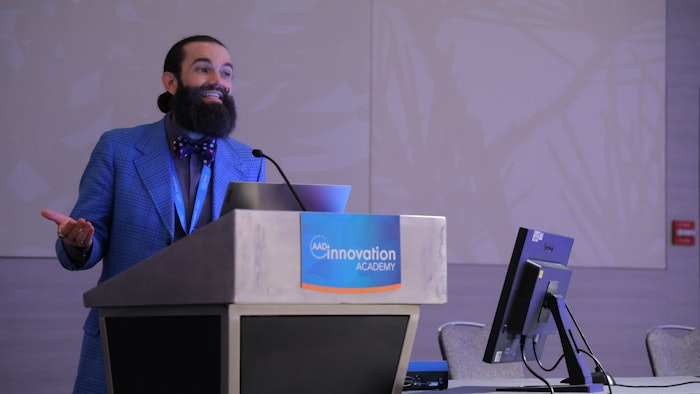
Although hidradenitis suppurativa (HS) is a common condition within the dermatologic community, knowledge of it among patients and outside clinicians is not widespread. Presenters in two Sunrise Sessions provided new evidence and education to help close this gap, both in terms of novel diagnostic tools and advanced therapeutic opportunities.
Timing is everything
According to Steven Daveluy, MD, FAAD, it can take upward of 10 years for a patient with HS to receive the correct diagnosis. But this isn’t because it’s rare or unnoticeable. Rather, there is a prevalent lack of awareness of the disease. Individuals themselves or physicians in other specialties or settings may attribute symptoms to infection, abscesses, or folliculitis, said Dr. Daveluy.
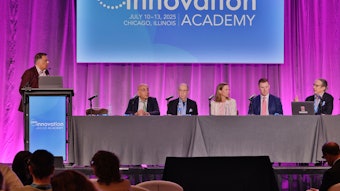
In SUN15 – Phenotyping Hidradenitis Suppurativa (HS): Findings of a Collaborative Artificial Intelligence (AI) Initiative, an expert panel addressed this problem, which involved taking matters into their own hands.
A group of dermatologists partnered with OM1 to develop an AI-driven approach that can help identify HS earlier and more frequently. The technology, called Patient Finder, analyzes concrete data, outlines shared characteristics, and produces a phenotype to detect patients with a high probability of having or developing HS.
“The AI tool can look at huge amounts of data from the health care journey of patients who are eventually diagnosed with HS, then identify clues that were missed along the way. We can use those clues to help identify the undiagnosed patients, leading to earlier diagnosis and treatment,” said Dr. Daveluy, who served as session director and is professor and program director at Wayne State Dermatology in Michigan.
Importantly, Patient Finder can access information from various sources beyond the dermatology office, such as primary care visits, hospital admissions, and consultations with other specialists.
“This is a real-world application of AI technology with direct relevance to the dermatologic community and patients in need — a practical application for a challenging problem in need of new solutions,” said Joseph Zabinski, PhD, MEM, vice president and head of commercial strategy and AI at OM1.
The technology will be life-changing for patients. Timely intervention means less permanent skin damage, said Dr. Daveluy.
“We need to prevent the formation of scars and tunnels, and we can only do that when it’s diagnosed and treated early. The disease also becomes more recalcitrant to treatment as it progresses, which means treatment is most effective early on,” he said.
Patient Finder for HS is still in development, but it is being used effectively in other areas, such as generalized pustular psoriasis (GPP). Dr. Daveluy and Zabinski said it won’t be long before it can be implemented into point-of-care assessments.
“We’re currently in the second phase of the process, where the AI model is now telling us the things that are important to identify undiagnosed patients. Once we learn from the model, we’ll be able to specify areas where physicians can modify their practice,” Dr. Daveluy said.
These educational and quality improvement resources will immensely benefit board-certified dermatologists, medical colleagues, and their patients, not only at the onset but long-term by being able to change the course of the disease.
Editor’s Note: The HS project described above was generously supported by Novartis. The AAD is grateful for the support of this important demonstration of the power of DataDerm™, the largest clinical registry in dermatology.
Pushing the boundary
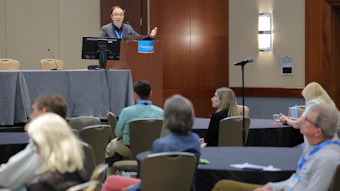
Initiation of treatment is the second big part in managing care for patients with HS. The session, SUN09 – Innovative and Advanced Management of Biologics and Small Molecule Inhibitors in Hidradenitis Suppurativa and Beyond, reviewed therapeutic challenges and presented new pharmacologic options.
Ten years ago, the U.S. Food and Drug Administration (FDA) approved the first drug, adalimumab (Humira), for the treatment of moderate to severe HS. Two additional drugs have received recent FDA approvals: secukinumab (Cosentyx, 2023) and bimekizumab (Bimzelx, 2024).
Session director Alexandra Charrow, MD, FAAD, said there are nuances to prescribing and monitoring medications, which boil down to managing HS with innovative, personalized solutions. Dr. Charrow is assistant professor of dermatology at Harvard Medical School and director of the Hidradenitis Suppurativa and Neutrophilic Dermatoses Clinic.
Therapeutic considerations include biologic versus small molecule inhibitor and single drug versus combination. Some cases may also warrant off-label medications, said Dr. Charrow.
 Alexandra Charrow, MD, FAAD
Presenters discussed the importance of therapeutic drug monitoring (TDM), which incorporates ongoing lab screenings to follow patient reactions and formulate ongoing management strategies. TDM can assist physicians and patients in determining the underlying cause of loss of response to medication. This most frequently occurs when a patient initially responds to the drug and then becomes resistant to it or when a patient doesn’t have any response to a standard biologic.
“Checking drug levels and drug-antibody formation can help determine the next steps in an evidence-based way,” Dr. Charrow said. “We don’t have the luxury of switching patients to another drug when response is lost to an FDA-approved medication. It is best to figure out why a patient has lost response; then we can figure out whether we need to increase the dose, substitute the medication entirely, or combine it with other therapies.”
Both biologics and small molecule inhibitors can produce cutaneous toxicities or other adverse events, she said.
“Small molecule inhibitors are associated with acne, and the acne is often dose-dependent and can be self-limited. If there is no improvement with time or inevitable dose reduction, we currently use standard acne treatment, including isotretinoin if needed,” Dr. Charrow said. “Biologics are associated with paradoxical reactions. These rashes most often resemble psoriasis; however, they behave more like atopic dermatitis in terms of their treatment response.”
There are at least six more biologic treatments currently in phase 3 trials, Dr. Charrow confirmed, including IL-1 and IL-17 inhibitors, JAK1 inhibitors, and BTK inhibitors.