A formula for hair regrowth
Establishing a strong framework can help provide tailor-made hair restoration services.
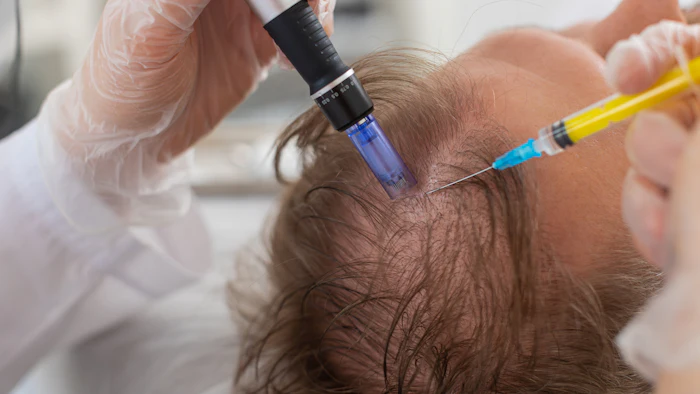
According to the National Council on Aging, approximately 85% of men and 33% of women will experience some form of hair loss in their lifetime. In addition to aging, factors like genetics, lifestyle, and other health conditions can cause or impact hair loss.
Robert Finney, MD, FAAD, is the founder of Soho Skin and Hair Restoration in New York City. Hair loss is not a one-size-fits-all issue, he said, but there are certain steps and practices one can take to improve care for patients who seek hair restoration.
Identifying the root cause
Think of the exam as a team sport, Dr. Finney said. A healthcare professional, such as a medical assistant, can save you time by taking patients’ initial assessment and medical history. For the physical portion, he recommends always using a dermatoscope to examine the scalp, even when it may not seem necessary.
 Robert Finney, MD, FAAD
Next steps will depend on diagnosis, Dr. Finney said, but there are operational efficiencies you can put in place to help streamline visits. For example, he prepopulates the electronic medical record with telogen effluvium (TE) labs so that if the patient reports shedding, he can quickly place an order for testing.
Dr. Finney said photos are a critical marker of the patient’s condition, beginning at baseline, because they track changes and can offer assurance during the treatment stage. Having a standardized process for capturing clinical photos also helps save time, as does using a headband to most accurately identify the level of hair loss.
“Without good before [treatment] photos, including a headband and moving hair from a comb-over, you are at the patient’s whim,” he said. “I can’t tell you the number of times a patient returns six months into treatment thinking nothing has improved even when the results are significant.”
It’s also important to be direct in all conversations and communications with patients, Dr. Finney said. This ensures that all parties are on the same page in terms of understanding and expectations.
Determining the right path
There are numerous things to consider when selecting a treatment for hair loss, Dr. Finney said, including disease characteristics, severity, and comorbidities. Take into account a patient’s routine, ability, and preferred outcomes as well, then choose a therapeutic approach that balances all these factors.
Hair loss that is still in an early stage can usually be treated with less aggressive treatments, Dr. Finney said, while late-stage disease often requires combination therapy to achieve sufficient hair regrowth.
One combination approach that has been a game-changer for his patients is adding dutasteride mesotherapy to in-office growth factor-based treatments.
“It can help reduce the need for oral 5ARIs [5-alpha-reductase inhibitors] and be instrumental in maximizing regrowth compared to currently commercially available treatments in office,” he said.
Platelet-rich plasma (PRP) therapy is a great option for patients with androgenetic alopecia. However, dermatologists must confirm that the patient is on an at-home regimen of minoxidil and a dihydrotestosterone (DHT) blocker before starting in-office treatments. Otherwise, the results may not be fruitful, Dr. Finney said.
“The root cause of genetic hair loss is a sensitivity to DHT. If you fail to block it, you will lose. Too frequently, I see patients offered PRP plus/minus minoxidil, and they are inevitably upset 12 to 18 months in when they have spent a lot of money and still look worse two years later.”
Ultimately, Dr. Finney said, the selected treatment program needs to be realistic and sustainable for the individual patient to ensure long-term adherence.
Looking forward
Dermatology has seen great strides in advanced therapies and devices, but anything new must be thoroughly vetted, Dr. Finney said. Something that is shiny, fancy, and costly or claims to be practice-changing does not necessarily have top-of-the-line performance, he said.
“Don’t get distracted by any device company’s flashy technology, especially when it is a glorified dermal delivery tool,” he said. “Make them prove it to you. If they won’t let you demo a device or serum, run the other way.”
Recently, Dr. Finney conducted a split scalp study where he treated patients with a commercially available growth factor serum delivered two ways. On one half of the scalp, he applied the serum with an inexpensive microneedling pen, and on the other half, he used a pricey, new ultrasound machine. He said the microneedling method delivered better, quicker results.
Regardless of technology, one of Dr. Finney’s biggest pieces of advice for dermatologists is to set and stick to a regimented follow-up schedule with patients. Checking in at least every six months will make for a smoother and more successful hair restoration experience.
“This allows you to ensure the desired result is both achieved and maintained,” he said. “And if the patient does slip or the initial result does not meet expectations, then you won’t lose a lot of time before stepping up therapy and reassessing in-office options to maximize regrowth potential.”