It’s complicated
Ongoing training, technique are vital as energy‑based and injectable treatments expand.
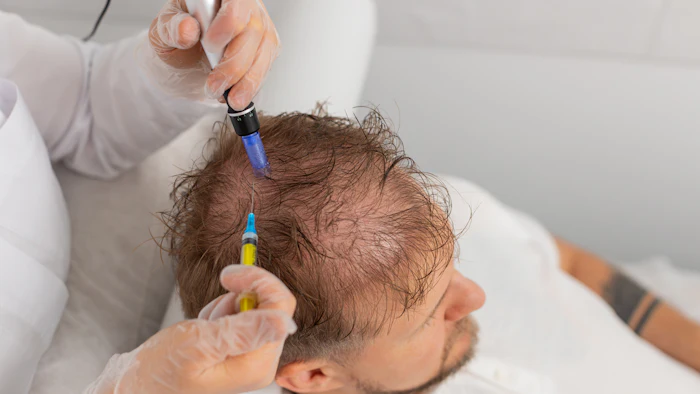
As lasers, radiofrequency (RF) devices, fillers, and surgical procedures continue to grow in popularity, dermatology experts are emphasizing a critical message: Complications are less about the technology itself and more about how — and by whom — these procedures are performed.
“Complications are largely preventable with proper training and technique. These are medical procedures and should be approached with that level of expertise,” said Arisa Ortiz, MD, FAAD, a professor of dermatology at the University of California, San Diego. “In practice, safety is less about the device and more about who is performing the procedure and how. This underscores the importance of training. As these treatments become more widespread, maintaining high standards of training and protocol-driven care is critical to ensuring safety and consistent outcomes.”
Dr. Ortiz and other leading dermatologists shared practical guidance on minimizing risk, managing adverse events, and setting realistic expectations when employing these aesthetic and medical devices.
Set expectations
 Mathew Avram, MD, JD, FAAD
“Redness and swelling are ubiquitous with fractional laser treatments, so I let the patient know they will experience them. In certain skin types, there is a higher rate of temporary hyperpigmentation, which clears with time,” he said. “The best way to avoid complications is to understand that more aggressive treatments often do not produce superior results, but they do greatly increase the risk of complications.”
When unexpected issues arise, Dr. Avram said a deep knowledge of laser tissue interaction and medical dermatology allows dermatologists to resolve most problems without prolonged, long-term consequences.
“There are two key components to addressing unexpected complications. First is having a strong knowledge of the technology and the laser-tissue interaction. Second is a strong understanding of medical dermatology,” he said. “By understanding the device and the nature of the side effect, most complications can be addressed with no long-term side effects.”
 Marc Avram, MD, FAAD
“Most complications are related to unrealistic expectations for patients. Thus, the consult is critical to setting realistic expectations — how much donor density a patient has. It is not the same for each patient,” Dr. Marc Avram said. “Also, consider the rate of ongoing hair loss. Ongoing hair loss will impact the perceived density of a hair transplant. That is why successful medical therapy is critical for maximum long-term density.”
Don’t get burned
 Arisa Ortiz, MD, FAAD
“Early recognition is key. Most are preventable with proper technique, but when they occur, management depends on the complication,” she said. “This includes topical steroids for inflammatory reactions, careful monitoring for nerve-related issues, and early intervention for burns or tissue injury.”
Dr. Ortiz said most complications are not device-related but operator-dependent, including improper technique, incorrect settings, or using the wrong modality for the indication. Training and experience are critical, she said, which includes understanding tissue depth, anatomy, and device physics.
 Before (top) and after synchronous ultrasound parallel beam technology to reduce wrinkles and tighten the skin.Source: Arisa Ortiz, MD, FAAD
As for the biggest risks with RF microneedling, Dr. Ortiz said serious complications can include burns, fat loss, and even nerve damage if improperly performed. It’s important to use appropriate needle depth, avoid non-insulated tips in darker skin, and ensure proper technique (e.g., full needle insertion before firing).
Face the facts
 Joel L. Cohen, MD, FAAD, FACMS
“First, I prefer full-field erbium resurfacing as it has several factors that I believe make it safer than CO2. Erbium has a very apparent endpoint of pinpoint bleeding, whereas with CO2 it is a more elusive endpoint with a very subtle tissue contraction,” Dr. Cohen said. “Erbium binds water 11-16 times more efficiently than CO2, and erbium has much less thermal effect than CO2. All of this translates to helping utilize full-field erbium resurfacing effectively and safely in areas that have more extensive lines and wrinkles — with a key recognizable endpoint of pinpoint bleeding and much more specificity and much less heat leading to dramatically reduced risk of pigment loss.”
Dr. Cohen said he uses plain lidocaine (without epinephrine) for the sulcus block around the mouth which allows the dermatologist to better see important pinpoint bleeding endpoint.
Regarding complications of ablative laser resurfacing, Dr. Cohen said it is important to know and to explain to your patient that post-treatment redness is expected and is part of the process of getting results. A recent consensus paper he collaborated on with Dr. Ortiz identified that post-inflammatory erythema was anticipated for up to four months after resurfacing. So, it’s not a complication, he said, but rather an expectation. Dr. Cohen said it signifies that the skin is still healing and remodeling.
Post-inflammatory hyperpigmentation (PIH) is different, he said.
“PIH is not something you should anticipate and connotes that the patient has not been rigorous or even diligent with sun protection strategies like broad spectrum sunscreen (covering not just UVB with SPF but also the longer wavelengths of UVA and visible light associated with pigmentation), seeking shade, wearing a hat, etc.,” he said. “As a reminder, tell patients to be aware of reflection and reapply sunscreen every two hours at a minimum — but more frequently if swimming, sweating, or toweling off.”
Finally, Dr. Cohen underscored the concern for bacterial infection after ablative resurfacing.
“I review cleanliness strategies with patients in detail. However, I don’t give post-laser antibiotics, and the consensus statement indicated that most experts don’t either,” he said. “I do give patients the antimicrobial spray hypochlorous acid to use along with washing to keep the face clean. I also have patients follow up a few times while they are re-epithelializing to answer any questions, make sure they are caring for the area, and to hopefully pick up on anything concerning (like infection, or even the extremely rare circumstance of lesions such as eruptive keratoacanthomas). Also, because the majority of Americans test serum positive for HSV antibodies, I do give patients antiviral prophylaxis with valcyclovir before and after ablative resurfacing to try to prevent Kaposi varicelliform eruption from an outbreak potentially spreading to the entire region-epithelializing face.”
Prepare for the worse
 Aaron Farberg, MD, FAAD
“Look at the skin and the vitals. A vasovagal patient is usually pale, cool, and bradycardic. An anaphylactic patient often has urticaria, angioedema, and tachycardia with hypotension,” he said.
For anaphylaxis, Dr. Farberg said delivering 0.3 milligrams of epinephrine IM in the lateral thigh is the first and most critical step.
“Do not wait for ‘classic’ symptoms to worsen. If there is respiratory distress or airway swelling, dose immediately,” he said. “For a vasovagal response, place the patient in the Trendelenburg position, apply cool compresses to the forehead/neck, and ensure they have a clear airway. Muscle tensing exercises can help abort a vasovagal response.”
If a patient incurs a Stevens-Johnson syndrome (SJS) response, Dr. Farberg said the first step is to stop the offending drug. Established treatments include cyclosporine and IVIG. Etanercept has been the go-to biologic, he said, however access may be an issue. New research and data reveal abrocitinib may be a suitable treatment for SJS, he added.
Across all modalities, experts underscored a unifying principle: Safety is driven by physician proficiency.
“These are medical procedures,” Dr. Farberg said. “They demand medical expertise.”