Facing worry and falsehoods
The complex landscape of facial rejuvenation and social media intersect, causing misinformation and anxiety among patients.
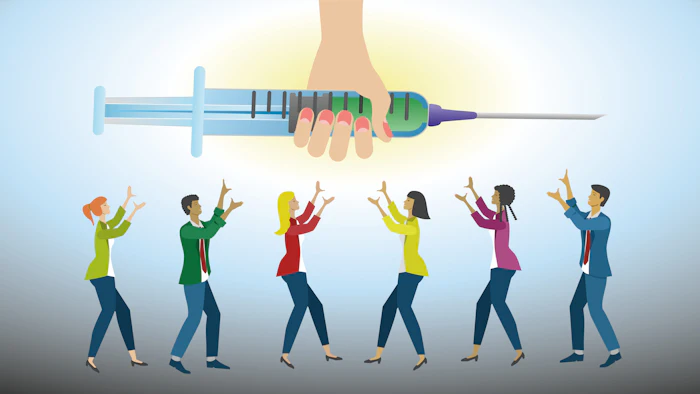
The road to injectable techniques, products, and research is paved with questionable information and exaggerated expectations, largely due to contemporary image filters and so-called “internet experts.”
Yet, for those dermatologists who are experienced in injectables — and those who want to be — there is a clear path to success that eliminates confusion and builds confidence. According to Melanie D. Palm, MD, MBA, FAAD, the key is to follow evidence-based guidance to determine the most appropriate treatments for achieving natural-looking outcomes with injectables while maximizing patient safety.
“We can’t treat injectables as simple, one-off procedures anymore. Facial rejuvenation has become a complex discipline that requires synthesizing anatomy, aging biology, patient psychology, and device knowledge — all while navigating a rapidly expanding evidence base and heightened awareness of complications,” said Dr. Palm, who is founder/medical director of Art of Skin MD, and an assistant clinical professor of dermatology at the University of California San Diego.
“We are moving beyond trends and returning to data-driven, anatomy-anchored, clinical reasoning,” she said. “Understanding the ‘why’ behind injectable controversies will help injectors make informed, individualized decisions and develop the confidence to navigate nuanced, real-world scenarios rather than textbook ideals. It will also help injectors achieve safer, more natural, more durable outcomes through thoughtful patient selection and technique refinement.”
An overdue tune-up
 Melanie D. Palm, MD, MBA, FAAD
One thing dermatologists are sorting through is the debate over whether hyaluronic acid (HA) fillers should be dissolved and biostimulatory fillers delayed prior to facial surgery. Vince Bertucci, MD, FRCPC, FAAD, said questions and controversy have swirled around injection timing, indications and contraindications, and their impact on surgical outcomes. Dr. Bertucci is founder/medical director of Bertucci Dermatology & MedSpa, and co-director of the Dermatologic Laser Surgery & Aesthetic Dermatology Fellowship at the University of Toronto in Canada.
“Biostimulators are surging in popularity as they stimulate the body’s own ability to produce collagen and elastin, for example. Many patients and physicians like that they are a ‘natural’ way to restore and enhance skin health,” Dr. Bertucci said. “Having said that, controversies exist around their role, effects, and timing in the context of plastic surgery. It requires a thorough decision-making process.”
According to Dr. Bertucci, best practices dictate the importance of planning ahead for surgery by discussing the cadence of these procedures.
Regarding the use of biostimulatory agents in patients who may later undergo facial surgery, Dr. Palm said the jury is still out.
“Some surgeons advocate avoiding them entirely; others feel they can be used judiciously if placed strategically and with full knowledge of how they remodel tissue,” Dr. Palm said. “Similarly, combining modalities — whether pairing energy devices with injectables, or using multiple filler types within a single treatment plan — is becoming standard. However, it raises new questions about sequencing, safety, and longevity.”
 Vince Bertucci, MD, FRCPC, FAAD
“With the advent of an increasing number of aesthetic weight loss solutions, there is a debate as to whether dermatologists should be prescribing these drugs,” Dr. Bertucci said.
Additionally, many dermatologists are sorting out differences in infraorbital rejuvenation, with surgeons pushing for surgery and injectors questioning whether subtle filler can still provide a safe, effective alternative.
“Should fillers still be first-line treatment? How do we approach patients with herniated fat pads, and when is dissolving superior to camouflaging,” Dr. Palm said. “Each of these themes underscores a shift toward a more individualized assessment and a deeper understanding of facial anatomy, aging patterns, and procedural sequencing.”
Tech support
Despite so many available injectable techniques and products, dermatologists have even more to consider — the role of technology in assessing the best treatment and delivering results. For example, ultrasound is a key consideration in evaluating filler placement, migration, and complication management.
While ultrasound has not been universally adopted, it’s becoming a valuable adjunct in complex cases, Dr. Bertucci said.
“Ultrasound has become a hot topic over the last few years. There are multiple courses and studies promoting its use. However, it can be cumbersome, and using it requires significant training,” he said. “Should it be used by everyone doing soft tissue fillers, or does it serve a more niche role such as in high-risk sites or for the management of complications?”
The big picture
Drs. Palm and Bertucci underscore that individualized treatment decisions must be the norm when weighing injectable options. Dermatologists must understand more than how to perform various techniques; they must recognize why treatment is best and how it works. This includes considerations such as:
- Needle versus cannula selection
- Deep versus superficial injection planes
- Management of previously migrated fillers
- Attention to biostimulatory products already in tissue
Without the big picture of injectable products and techniques, Dr. Palm said a lack of experience could lead to “unintended anatomic consequences,” including seeing filler in inadvertent compartments, altered fat-pad dynamics, or previously placed biostimulatory products that affect contouring.
“Recognizing these factors changes a treatment plan from filling a deficit to orchestrating a thoughtful, multilayered rejuvenation,” she said.
Dr. Palm stressed the importance of standardizing complication preparedness.
“The conversation has broadened beyond classic vascular occlusion readiness to include delayed inflammatory nodules, the appropriate role of hyaluronidase, and even nuanced topics like the use of adjuncts (e.g., nitroglycerin paste, which remains controversial),” she said. “What ties all of this together is a commitment to natural, harmonious outcomes driven by anatomy, incremental dosing, and evidence-based decision-making, rather than trends.”
That’s a sentiment expressed by Dr. Bertucci as well, especially given the influence of social media.
“The field of injectable fillers is advancing rapidly and the pervasiveness of social media drives misinformation,” Dr. Bertucci said. “Evidence-based data can help us optimize patient selection, address patient concerns, achieve natural results, promote skin health, and minimize complications.”