Time to get energized
Energy-based devices push dermatology into a new era of precision care.
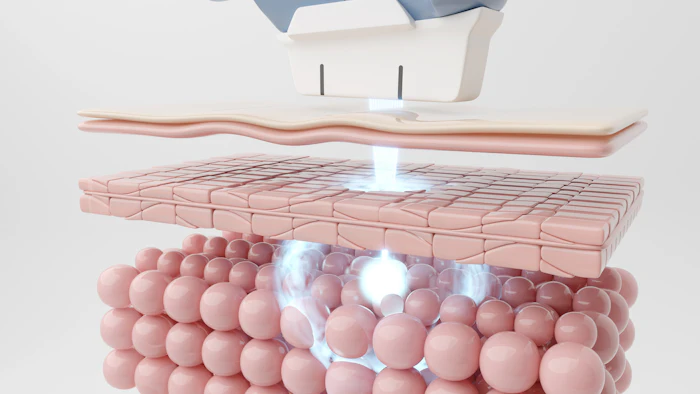
Dermatology is entering a pivotal phase as energy‑based devices evolve from broad, heat‑based tools into precision instruments capable of targeting tissue with unprecedented selectivity.
Once primarily associated with cosmetic procedures, energy‑based technologies are now reshaping how dermatologists approach vascular disease, photodamage, scarring, acne, hair loss, and even skin cancer. The shift reflects a deeper understanding of laser–tissue interaction, advances in engineering, and growing integration of imaging, artificial intelligence, and biologic targeting, according to Eric Bernstein, MD, MSE, FAAD, a clinical professor of dermatology at the University of Pennsylvania Perelman School of Medicine in Philadelphia.
“We’ve made tremendous strides in developing and testing lasers for dermatologic conditions in the field of dermatology, and virtually all dermatologists will enhance their lives and the lives of their patients by using lasers and energy-based devices in their practices, even if they are strictly medical-based dermatologists,” Dr. Bernstein said.
Favorite things
 Eric Bernstein, MD, MSE, FAAD
“It has dramatically changed my practice because it uses fiber laser technology which delivers up to 5,000 low-energy pulses per second. The pulses can be configured in almost endless combinations enabling surface treatments, deep treatments, and laser coring that can ablate variably sized cores from the skin,” he said. “I have found that this laser can do things I couldn’t do before, like treat all Fitzpatrick skin types without pigmentary issues, treat with less pain often without the need for any topical numbing cream, and create very little downtime due to both the small-diameter injuries and the unique healing following these treatments.”
As for vascular lasers, Dr. Bernstein pointed to a pulsed dye laser (PDL) that operates at 595 nanometers and is top-of-the-line for treating vascular conditions such as rosacea, port wine capillary malformations, and other vascular lesions. It also features a variable spot handpiece that can be adjusted from 3mm to 15mm with the turn of a wheel.
“This laser is quite powerful and has significantly extended dye life compared to previous PDLs, which have a long history of safety and efficacy,” Dr. Bernstein said. “There is also a solid-state potassium titanyl phosphate (KTP) 532-nanometer laser that spot sizes up to 16mm and can treat linear vessels and diffuse erythema.”
Constructive comparison
 Kristen Kelly, MD, FAAD
As for new‑generation PDL platforms, Dr. Kelly said many now feature larger spot sizes, refined pulse structures, and both pre‑ and post‑treatment cryogen cooling, improving patient comfort and efficiency.
“The 595-nanometer PDL remains a workhorse for treatment of vascular conditions, but the 532-nanometer KTP is gaining traction,” she said. “The long pulse 532-nanometer device might be slightly better tolerated in some patients with less purpura and less pain, when used with longer pulse durations.”
For deeper vascular lesions, longer wavelengths such as 755-nanometer and 1064-nanometer Nd:YAG lasers are often the logical choice, Dr. Kelly said, although she cautioned that higher energy requirements increase the risk of scarring and demand greater clinical expertise.
Dr. Kelly said research is currently underway to determine why some lesions respond to laser treatment better than others. Imaging studies suggest that lesions with larger or deeper vessels — and specific dermoscopic patterns — may be more resistant, underscoring the growing role of optical imaging and treatment personalization, she said.
Precision plays a role
 Lilit Garibyan, MD, FAAD
“At the same time, we are beginning to see the emergence of approaches that introduce the possibility of localized, injectable, or targeted interventions, offering a level of precision and customization that extends beyond traditional platform-based devices,” Dr. Garibyan said.
Pulsed dye, KTP, and Nd:YAG lasers continue to offer precise targeting of vascular lesions, she said, while fractional lasers, intense pulsed light (IPL), and hybrid devices remain foundational for resurfacing and collagen stimulation. Additionally, she said adipose tissue is best treated with cryolipolysis combined with glucagon-like peptide-1 (GLP1) and muscle stimulation devices.
“Across all indications, there is a clear movement toward combination therapies, customized protocols, and technologies that enhance treatment precision and planning,” said Dr. Garibyan.
From the top
 Keyvan Nouri, MD, MBA, FAAD
Dr. Nouri said that although hair transplantation remains the gold standard for treating androgenic alopecia, light‑based therapies are increasingly being used as an adjunctive option for a broader range of patients, including those with alopecia areata and chemotherapy‑induced hair loss.
“Low-level laser therapy (LLLT) for treatment of alopecia was accidentally discovered in the 1960s, when mice that had been irradiated with a low-fluence red laser grew hair,” Dr. Nouri said. “Since that time, animal and human studies have demonstrated that LLLT promotes hair regrowth in a variety of nonscarring alopecias.”
Unfortunately, he said, the exact mechanism of action by which LLLT stimulates hair growth is unknown. However, laser phototherapy in alopecia is assumed to stimulate anagen re-entry in telogen hair follicles, prolong the duration of the anagen phase, increase rates of proliferation in active anagen hair follicles, and prevent premature catagen development.
“We’re talking about patients with androgenic alopecia — both men and women, patients with alopecia areata, and also patients who develop alopecia following chemotherapy,” he said. “For many of these individuals, regrowth can be slow or incomplete, prompting interest in noninvasive tools that may stimulate hair follicles and accelerate recovery.”
Despite growing consumer visibility of laser combs, helmets, and caps, Dr. Nouri emphasized that light‑based devices should not be viewed as standalone cures. As with many evolving technologies, debate remains over the degree of benefit provided by these devices. Dr. Nouri acknowledged that differing opinions are inevitable.
“There’s always debate on anything,” he said. “Whether it works, whether it’s worth it.”
Still, enthusiasm appears to be growing as research expands and patient interest increases. Low‑level light therapy may not replace established treatments, he said, but for selected patients, it offers a noninvasive, low‑risk option that aligns with a multimodal approach to hair restoration.
“Hair transplantation is still the gold standard,” he said. “Everything else — minoxidil, finasteride, spironolactone, platelet‑rich plasma, and light devices — are adjuvant therapies. They’re not a panacea, but they can help as another tool in the toolbox.”
Getting under your skin
 Christopher B. Zachary, MD
Recently, the U.S. Food and Drug Administration (FDA) approved the treatment paradigm known as “controlled hyperthermia” for basal cell carcinomas (BCCs) on the trunk.
“This Arrhenius-controlled hyperthermic process induces gradual tumor involution and is different from the traditional coagulation and necrotic process of electrodesiccation and curettage,” Dr. Zachary said. “I had the privilege of developing this approach in collaboration with my colleague and friend, David Ozog, MD, FAAD, at Henry Ford Health System. This would not have been possible without the incredible laser scientists and engineers at Sciton and Michelson Diagnostics and represents an important milestone that may benefit patients for decades to come.”
Dr. Zachary said that although the concept of apoptosis is long established, its deliberate clinical application to the treatment of BCC using precisely controlled thermal delivery is new.
“The underlying biology has been well understood for years; however, until recently, our ability to achieve consistent, spatially controlled tissue heating in vivo has been limited,” Dr. Zachary said.
Laser‑assisted treatment of skin cancer, guided by advanced imaging such as optical coherence tomography, is expected to expand in the coming years as long‑term outcomes become clearer. That’s according to Jill Waibel, MD, FAAD, a clinical voluntary assistant professor of dermatology at the University of Miami in Florida.
“Future research will integrate artificial intelligence to make us more efficient and precise laser physicians,” she said. “Imaging will be integrated into laser devices. Robotics will emerge and, in many cases, will assist to make treatments more precise and change from area to area.”
Laser-assisted delivery of medications for both skin and non-skin indications will continue to evolve as well, she said. As such, it will be important for dermatologists to understand FDA regulations and be aware of any notices the FDA has posted, Dr. Waibel said.
“Today’s aesthetic patients value safety and long-term results over trends. They are seeking experts to deliver outstanding care from reliable technologies,” she said.
Ongoing debate, measured optimism
 Omar A. Ibrahimi, MD, PhD, FAAD
“These modalities may allow us to get closer to the goal of noninvasive skin tightening and lifting. However, I view this with cautious optimism, as we have seen many times in the past that technologies come out and claim to achieve skin tightening and lifting, yet they fail to meet those objectives,” Dr. Ibrahimi said.
Ultimately, Dr. Ibrahimi said energy-based devices have the potential to address cosmetic and medical dermatology cases. So, it’s essential for physicians to stay abreast of ongoing research, opportunities, and limitations.
“We use energy-based devices every day to help improve the health of our patients’ skin. From treating birthmarks in newborns or traumatic burn, acne, and surgical scars, to reducing active acne or even the risk of nonmelanoma skin cancer,” Dr. Ibrahimi said. “The future is bright (no pun intended), and it is imperative dermatologists remain aware and active in leading this field.”