Dos, don’ts, pearls, and practicalities of dermatologic surgery
Leading dermatologists share emerging evidence and critical considerations in cosmetic procedures.
Dermatologic surgery is a niche in the specialty, so it can be refreshing and rewarding when skilled physicians who are at the helm of exceptional experience and published research provide advice. DermWorld gathered a group of experts across the country who could do just this.
Perfected preparation
 Jill S. Waibel, MD, FAAD
During the patient assessment, Dr. Waibel’s goal is to set realistic expectations, which she does by using available information and resources to bolster education and awareness. This includes sharing before and after photos, so a patient understands the variation of possible outcomes as well as continuously reiterating the anticipated number of treatments and/or follow-ups, even if it means feeling like a broken record.
Dr. Waibel said it is helpful to employ a standard form that she and the patient complete together during the consultation. She outlines the following components and then gets patient consent to ensure all parties are aligned.
- Diagnosis
- Defined areas of treatment
- Technique type (e.g., laser, injectable)
- Device(s) for each area
- Planned post-op treatment regimen, including pharmacologic (medication, dose, frequency) and nonpharmacologic (follow-up appointments and/or additional treatments — how many and when)
- Potential risks or concerns
“It’s important to have strong communication tools for you and your team to be on the same page, especially for same-day treatments,” Dr. Waibel said.
It’s also good to review any documentation or billing expectations with the patient ahead of time. Essentially, include anything in your preparation that can help avoid potential surprises, she said.
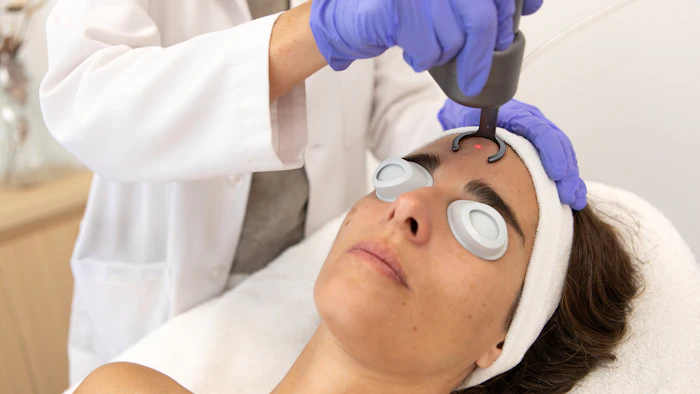
This applies to the procedure itself as well, ensuring the physician and care team have everything on hand that may be needed for any outcome. For example, Dr. Waibel said all her procedure rooms are equipped with fire extinguishers, smoke evacuators, and clean surfaces clear of any flammable substances. Ocular safety is very important for patients and health care professionals, so proper eye protection is always available. She also uses tongue depressors to pull skin taut and protect areas such as eyebrows and eyelashes from accidental singeing.
A maturing, multifaceted landscape
 Sue Ellen Cox, MD, FAAD
An influx of clinical evidence and trials has opened the floodgates of the botulinum toxin market. Dr. Cox said a seven-year monopoly of one brand has turned into a handful of products with even more in the five-year pipeline. With increased options come increased marketing dynamics, and many dermatologists are uncertain about how to respond to this shift.
“How do we navigate this new toxin landscape?” asked Dr. Cox. “How many toxins do we need to carry? How do we distinguish good science from great marketing?”
Her answer is to strike a balance between the significant clinical and nonclinical considerations. Clinical factors include precision versus field effect, action onset, product duration, physician training, and patient population. Nonclinical factors include brand recognition and brand loyalty, cost (“bigger orders equal bigger savings”), product packaging (e.g., ease of use, storage requirements), and brand representative quality of service.
Weighing these components and putting a plan in action made a huge impact in Dr. Cox’s practice. She saw an 18% reduction in cost of goods from October 2014 to July 2025 by reallocating a subset of patients to a different product. The change also increased her toxin EBITDA (earnings before interest, taxes, depreciation, and amortization) by 11% over the same time period, she said.
“In a market full of clinically effective solutions, the differentiator often lies in the nonclinical considerations,” Dr. Cox said. “Make sure your clinically significant considerations are met, then weigh your pros and cons for each product. Have meaningful conversations with vendors about the things that most impact your practice and patients.”
Easy as one, two, three
 David M. Ozog, MD, FAAD
Perfusion: Goals are to prevent vasospasm, support microvascular flow, and protect at-risk edges. Dr. Ozog said this is particularly important for flaps and grafts that are higher risk and appear “tight, blanched, cold, or slow to pink up.” His technical pearls include making smaller aliquots along the superficial plane and around the vulnerable perimeter, and falling back on foundational tactics, such as warm applications, gentle reinforcement, and relaxed dressings.
Scarring: There are several tricks one can employ to ease dynamic tension around the flap or graft and minimize scarring, Dr. Ozog said. For example, administering botulinum toxin during the high-signal early phase can reduce muscle pull across a closure and help form flatter, narrower scars. Several split-scar randomized controlled trials have demonstrated that early injections are more impactful to scarring outcomes than injections given later during the treatment phase, he said.
“Treat the vectors that would pull the wound apart, not the wound itself,” Dr. Ozog said.
Pain/itch: To ensure an optimal recovery experience, dermatologists should focus on alleviating neurogenic inflammation and reducing allodynia, said Dr. Ozog, who prioritizes phenotypes to create a progression plan. The most common high-yield phenotypes are focal allodynia or neuroma-like scar pain, acute remedial pain or itch in high-mobility areas, and Raynaud’s-like vasospasm pain.
“The ‘comfort dividend’ matters,” he said. “Less pain often means less protective grimacing, less tension, better sleep, and better wound care adherence.”
Dr. Ozog’s order of business is to pair a plane with a problem (e.g., intradermal for itch or subcutaneous around focal pain), map the symptoms to treat the “hot spots,” and clearly document before and after using the visual analog scale and photos.
In a clinical anchor trial for forehead linear repair, Dr. Ozog said the use of botulinum neurotoxin type E significantly reduced pain and itch during the wound healing process compared to placebo.
“The neuro-immune-vascular mechanical loop works when the same injection simultaneously reduces vasospasm, dynamic tension, and neurogenic inflammation — improving survival and the cosmetic endpoint,” he said.
Practice, then preach
The dermatologic surgeons agree: Controlled studies are imperative to their work as is publishing validated results.
“This field needs pragmatic surgical data,” Dr. Ozog said.
 Girish S. Munavalli, MD, MHS, FAAD
“RFMN has been successfully used to treat various dermatologic conditions, but serious complications have been reported,” said Dr. Munavalli, who is founder and medical director of Dermatology, Laser, and Vein Specialists of the Carolinas in Charlotte, North Carolina. “Implications include treating RFMN as a medical procedure that requires trained operators, carefully selecting a device and adjusting settings based on the patient and indication, and maintaining vigilance for adverse events.”
For RFMN procedures, Dr. Munavalli said physicians should consider three main factors:
- Needle depth: Actual penetration depth may vary by tissue location.
- Energy delivery: The intended level must reach the dermis.
- Needle design: Elements like sharpness, size, and insulation impact the outcome.
“Tissue impedance affects energy distribution and motor mechanics influence penetration consistency. What you dial in is not always what you get,” he said.
 Roy G. Geronemus, MD, FAAD
According to Dr. Geronemus, weekly combination treatment of pulsed dye lasers and focal point lasers produces drastic improvement in infant port-wine birthmarks. In one study, 70% of patients achieved near total (76-95%) or complete clearance (96-100%) at two months postop. The three remaining patients saw improvement of 51-75% and received additional treatments to reach near total clearance. On average, the patients received eight weekly treatments over two months.
With such successful outcomes, Dr. Geronemus has explored daily treatments over fewer weeks, which is much more convenient for families who have to rearrange their schedule to travel for therapy. Early experiments show benefit to this approach, he said, with no additional risks or adverse effects.
Both he and Dr. Waibel, who frequently work with children, urge dermatologists to do pro bono work, if possible, to give back to patients and communities who are underserved. In a demanding field, it’s equally important to find passion and inspiration anywhere you can, Dr. Waibel said.
 Before and after comparison of port-wine birthmark treatment on infant showing significant improvement in skin discoloration.Source: Roy G. Geronemus, MD, FAAD